Home
| About
| Mine Tracker
| RSS
| Footer
▄▄▄▄▄▄▄▄▄▄▄▄▄▄▄▄▄▄▄▄▄▄▄▄▄▄▄▄▄▄▄▄▄▄▄▄▄▄▄▄▄▄▄▄▄▄▄▄▄▄▄▄▄▄▄▄▄▄▄▄▄▄▄▄▄▄▄▄▄▄▄▄▄▄▄▄▄▄▄▄▄▄▄▄▄▄▄▄▄▄▄▄▄▄▄▄
█▄▄░▄▄█░▄▄▀█░▄▄▀█▀▄▀█░▄▄███░▄▄▀█░▄▄▀█░▄▀███▄▄░▄▄█░▄▄▀█░▄▄▀█▀▄▀█░▄▄█░▄▄▀█░▄▄▀██▄██░███▄██▄░▄█░██░
███░███░▀▀▄█░▀▀░█░█▀█░▄▄███░▀▀░█░██░█░█░█████░███░▀▀▄█░▀▀░█░█▀█░▄▄█░▀▀░█░▄▄▀██░▄█░███░▄██░██░▀▀░
███░███▄█▄▄█▄██▄██▄██▄▄▄███▄██▄█▄██▄█▄▄██████░███▄█▄▄█▄██▄██▄██▄▄▄█▄██▄█▄▄▄▄█▄▄▄█▄▄█▄▄▄██▄██▀▀▀▄
▀▀▀▀▀▀▀▀▀▀▀▀▀▀▀▀▀▀▀▀▀▀▀▀▀▀▀▀▀▀▀▀▀▀▀▀▀▀▀▀▀▀▀▀▀▀▀▀▀▀▀▀▀▀▀▀▀▀▀▀▀▀▀▀▀▀▀▀▀▀▀▀▀▀▀▀▀▀▀▀▀▀▀▀▀▀▀▀▀▀▀▀▀▀▀▀
Book; How to Downsize a Transport Network?
https://solar.lowtechmagazine.com/2023/10/thematic-book-series-how-to-downsize-a-transport-network/
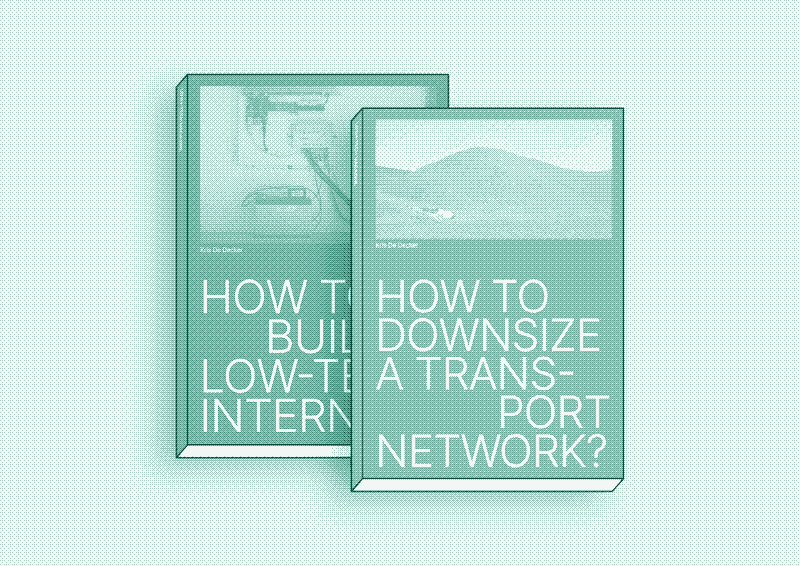
Fast and cheap transportation props up industrial societies, both for the moving of people and cargo. However, our transport networks are very wasteful of energy and utterly dependent on fossil fuels. In this series of articles, Low-tech Magazine critically examines the call for electrified vehicles, which depend on unsustainable batteries and infrastructures.
https://solar.lowtechmagazine.com/2023/10/thematic-book-series-how-to-downsize-a-transport-network/
Fast and cheap transportation props up industrial societies, both for the moving of people and cargo. However, our transport networks are very wasteful of energy and utterly dependent on fossil fuels. In this series of articles, Low-tech Magazine critically examines the call for electrified vehicles, which depend on unsustainable batteries and infrastructures.
Book; Dawn Watch
https://blogs.lse.ac.uk/lsereviewofbooks/2018/01/17/long-read-review-the-dawn-watch-joseph-conrad-in-a-global-world-by-maya-jasanoff/
In her smoothly written and ingeniously constructed new book, The Dawn Watch: Joseph Conrad in a Global World, Harvard historian Maya Jasanoff offers the life and work of the novelist Joseph Conrad as a tool with which to untangle the railroads, steamship routes and telegraph cables that made the world smaller in the nineteenth century. Born Józef Teodor Konrad Korzeniowski in 1857 to Polish nationalists in exile in imperial Russia, Conrad spent the first 40 years of his life as a young immigrant in London and as a sailor in the French and British merchant marines. In the late 1890s he settled permanently in England and began his career as a novelist. Conrad’s personal history and geography, from Russia to the Congo, Jasanoff argues, shows a ‘global world’ in the making: his fiction offers a meditation on coping with that new world. Since most of Conrad’s papers are from his writing life, Jasanoff finds Conrad’s maritime life by triangulating between archival records, broader historical contexts and four of his most famous novels, The Secret Agent, Lord Jim, Heart of Darkness and Nostromo, published between 1899 and 1907.
https://blogs.lse.ac.uk/lsereviewofbooks/2018/01/17/long-read-review-the-dawn-watch-joseph-conrad-in-a-global-world-by-maya-jasanoff/
In her smoothly written and ingeniously constructed new book, The Dawn Watch: Joseph Conrad in a Global World, Harvard historian Maya Jasanoff offers the life and work of the novelist Joseph Conrad as a tool with which to untangle the railroads, steamship routes and telegraph cables that made the world smaller in the nineteenth century. Born Józef Teodor Konrad Korzeniowski in 1857 to Polish nationalists in exile in imperial Russia, Conrad spent the first 40 years of his life as a young immigrant in London and as a sailor in the French and British merchant marines. In the late 1890s he settled permanently in England and began his career as a novelist. Conrad’s personal history and geography, from Russia to the Congo, Jasanoff argues, shows a ‘global world’ in the making: his fiction offers a meditation on coping with that new world. Since most of Conrad’s papers are from his writing life, Jasanoff finds Conrad’s maritime life by triangulating between archival records, broader historical contexts and four of his most famous novels, The Secret Agent, Lord Jim, Heart of Darkness and Nostromo, published between 1899 and 1907.
Book; Cobalt Red
https://www.foreignaffairs.com/reviews/cobalt-red-how-blood-congo-powers-our-lives

The technology giants that produce these sleek electronic consumer goods argue that they observe the necessary regulations with respect to local labor practices and environmental protection. In fact, the book astutely shows how lax enforcement by a weak and corrupt Congolese state has allowed shocking abuses in the working conditions and treatment of miners, as well as the degradation of the environment in the region with appalling health consequences for locals. Kara also reveals a system of intermediary agents that connects individual miners to a diffuse array of buyers, depots, concessionaires, processors, and refining industries that all take in a share of the value of the mined cobalt. At the other end of this sequence of actors are the battery producers under contract with the global technology corporations, which can plausibly plead ignorance about the many abuses occurring at the far end of the chain.
https://www.foreignaffairs.com/reviews/cobalt-red-how-blood-congo-powers-our-lives
The technology giants that produce these sleek electronic consumer goods argue that they observe the necessary regulations with respect to local labor practices and environmental protection. In fact, the book astutely shows how lax enforcement by a weak and corrupt Congolese state has allowed shocking abuses in the working conditions and treatment of miners, as well as the degradation of the environment in the region with appalling health consequences for locals. Kara also reveals a system of intermediary agents that connects individual miners to a diffuse array of buyers, depots, concessionaires, processors, and refining industries that all take in a share of the value of the mined cobalt. At the other end of this sequence of actors are the battery producers under contract with the global technology corporations, which can plausibly plead ignorance about the many abuses occurring at the far end of the chain.
PDF; Our Common Future
https://sustainabledevelopment.un.org/content/documents/5987our-common-future.pdf
In the middle of the 20th century, we saw our planet from space for the first time. Historians may eventually find that this vision had a greater impact on thought than did the Copernican revolution of the 16th century, which upset the human self-image by revealing that the Earth is not the centre of the universe. From space, we see a small and fragile ball dominated not by human activity and edifice but by a pattern of clouds, oceans, greenery, and soils. Humanity's inability to fit its activities into that pattern is changing planetary systems, fundamentally. Many such changes are accompanied by life-threatening hazards. This new reality, from which there is no escape, must be recognized - and managed.
https://sustainabledevelopment.un.org/content/documents/5987our-common-future.pdf
In the middle of the 20th century, we saw our planet from space for the first time. Historians may eventually find that this vision had a greater impact on thought than did the Copernican revolution of the 16th century, which upset the human self-image by revealing that the Earth is not the centre of the universe. From space, we see a small and fragile ball dominated not by human activity and edifice but by a pattern of clouds, oceans, greenery, and soils. Humanity's inability to fit its activities into that pattern is changing planetary systems, fundamentally. Many such changes are accompanied by life-threatening hazards. This new reality, from which there is no escape, must be recognized - and managed.
Our Common Future
https://en.wikipedia.org/wiki/Our_Common_Future
Our Common Future, also known as the Brundtland Report, was published in October 1987 by the United Nations through the Oxford University Press. This publication was in recognition of Gro Harlem Brundtland, former Norwegian Prime Minister and Chair of the World Commission on Environment and Development (WCED). Its targets were multilateralism and interdependence of nations in the search for a sustainable development path. The report sought to recapture the spirit of the Stockholm Conference which had introduced environmental concerns to the formal political development sphere. Our Common Future placed environmental issues firmly on the political agenda; it aimed to discuss the environment and development as one single issue.
https://en.wikipedia.org/wiki/Our_Common_Future
Our Common Future, also known as the Brundtland Report, was published in October 1987 by the United Nations through the Oxford University Press. This publication was in recognition of Gro Harlem Brundtland, former Norwegian Prime Minister and Chair of the World Commission on Environment and Development (WCED). Its targets were multilateralism and interdependence of nations in the search for a sustainable development path. The report sought to recapture the spirit of the Stockholm Conference which had introduced environmental concerns to the formal political development sphere. Our Common Future placed environmental issues firmly on the political agenda; it aimed to discuss the environment and development as one single issue.
Book; Private Regulation of Labor Standards in Global Supply Chains: Problems, Progress, and Prospec
https://www.jstor.org/stable/10.7591/j.ctv16kkx12
Private Regulation of Labor Standards in Global Supply Chains examines the effectiveness of corporate social responsibility on improving labor standards in global supply chains. Sarosh Kuruvilla charts the development and effectiveness of corporate codes of conduct to ameliorate "sweatshop" conditions in global supply chains. This form of private voluntary regulation, spearheaded by Nike and Reebok, became necessary given the inability of third world countries to enforce their own laws and the absence of a global regulatory system for labor standards. Although private regulation programs have been adopted by other companies in many different industries, we know relatively little regarding the effectiveness of these programs because companies don't disclose information about their efforts and outcomes in regulating labor conditions in their supply chains. Private Regulation of Labor Standards in Global Supply Chains presents data from companies, multi-stakeholder institutions, and auditing firms in a comprehensive, investigative dive into the world of private voluntary regulation of labor conditions. The picture he paints is wholistic and raw, but it considers several ways in which this private voluntary system can be improved to improve the lives of workers in global supply chains.
https://www.jstor.org/stable/10.7591/j.ctv16kkx12
Private Regulation of Labor Standards in Global Supply Chains examines the effectiveness of corporate social responsibility on improving labor standards in global supply chains. Sarosh Kuruvilla charts the development and effectiveness of corporate codes of conduct to ameliorate "sweatshop" conditions in global supply chains. This form of private voluntary regulation, spearheaded by Nike and Reebok, became necessary given the inability of third world countries to enforce their own laws and the absence of a global regulatory system for labor standards. Although private regulation programs have been adopted by other companies in many different industries, we know relatively little regarding the effectiveness of these programs because companies don't disclose information about their efforts and outcomes in regulating labor conditions in their supply chains. Private Regulation of Labor Standards in Global Supply Chains presents data from companies, multi-stakeholder institutions, and auditing firms in a comprehensive, investigative dive into the world of private voluntary regulation of labor conditions. The picture he paints is wholistic and raw, but it considers several ways in which this private voluntary system can be improved to improve the lives of workers in global supply chains.
Book; Dead in the Water
https://www.matthew-campbell.com/dead-in-the-water
Dead in the Water is a shocking expose of the corrupt inner workings of international shipping, told through the lens of the Brillante hijacking and its aftermath. Through first-hand accounts of those who lived it—from members of the ship’s crew and witnesses to the attacks, to the ex-London detectives turned private investigators seeking to solve Mockett’s murder and bring justice to his family—award-winning Bloomberg reporters Matthew Campbell and Kit Chellel piece together the astounding truth behind one of the most brazen financial frauds in history.
https://www.matthew-campbell.com/dead-in-the-water
Dead in the Water is a shocking expose of the corrupt inner workings of international shipping, told through the lens of the Brillante hijacking and its aftermath. Through first-hand accounts of those who lived it—from members of the ship’s crew and witnesses to the attacks, to the ex-London detectives turned private investigators seeking to solve Mockett’s murder and bring justice to his family—award-winning Bloomberg reporters Matthew Campbell and Kit Chellel piece together the astounding truth behind one of the most brazen financial frauds in history.
Book; The Rare Metals War
https://scribepublications.co.uk/books-authors/books/the-rare-metals-war-9781912854264
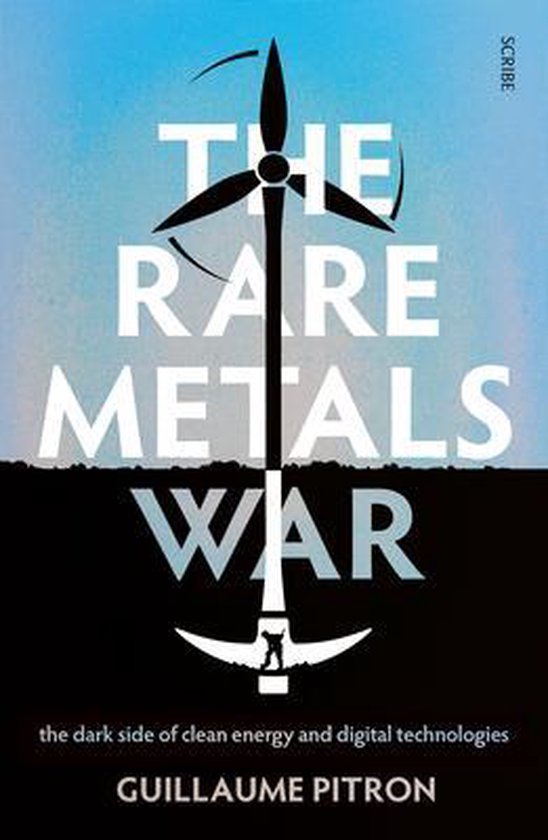
Translated from the French, Guillaume Pitron’s The Rare Metal War (2018) is a blistering journey through the political, strategic and environmental consequences of the world’s need for rare earth minerals to drive the energy transition. China’s strategic manipulation and landgrab of skills, industries and resources is detailed with admiring scorn while the western’s world apathy is considered as a general weakness of capitalism. The book is high on opinion and is meant to pack a punch. There are however also several informative appendices with data and a number of interesting factoids that I enjoyed. This is a activism more than journalism ending with the conclusion that Europe, and France especially, should restart their mining industries and do it to the highest standards; on the argument that clean mines in Europe for metals we use ourselves will prevent unmitigated environmental degradation in less regulated places like China.
https://scribepublications.co.uk/books-authors/books/the-rare-metals-war-9781912854264
Translated from the French, Guillaume Pitron’s The Rare Metal War (2018) is a blistering journey through the political, strategic and environmental consequences of the world’s need for rare earth minerals to drive the energy transition. China’s strategic manipulation and landgrab of skills, industries and resources is detailed with admiring scorn while the western’s world apathy is considered as a general weakness of capitalism. The book is high on opinion and is meant to pack a punch. There are however also several informative appendices with data and a number of interesting factoids that I enjoyed. This is a activism more than journalism ending with the conclusion that Europe, and France especially, should restart their mining industries and do it to the highest standards; on the argument that clean mines in Europe for metals we use ourselves will prevent unmitigated environmental degradation in less regulated places like China.
Rules Without Rights: Land, Labor, and Private Authority in the Global Economy
https://books.google.nl/books?id=P49HDwAAQBAJ
Activists have exposed startling forms of labor exploitation and environmental degradation in global industries, leading many large retailers and brands to adopt standards for fairness and sustainability. This book is about the idea that transnational corporations can push these rules through their global supply chains, and in effect, pull factories, forests, and farms out of their local contexts and up to global best practices. For many scholars and practitioners, this kind of private regulation and global standard-setting can provide an alternative to regulation by territorially bound, gridlocked, or incapacitated nation states, potentially improving environments and working conditions around the world and protecting the rights of exploited workers, impoverished farmers, and marginalized communities. But can private, voluntary rules actually create meaningful forms of regulation? Are forests and factories around the world being made into sustainable ecosystems and decent workplaces? Can global norms remake local orders? This book provides striking new answers by comparing the private regulation of land and labor in democratic and authoritarian settings. Case studies of sustainable forestry and fair labor standards in Indonesia and China show not only how transnational standards are implemented “on the ground” but also how they are constrained and reconfigured by domestic governance. Combining rich multi-method analyses, a powerful comparative approach, and a new theory of private regulation, this book reveals the contours and contradictions of transnational governance.
https://books.google.nl/books?id=P49HDwAAQBAJ
Activists have exposed startling forms of labor exploitation and environmental degradation in global industries, leading many large retailers and brands to adopt standards for fairness and sustainability. This book is about the idea that transnational corporations can push these rules through their global supply chains, and in effect, pull factories, forests, and farms out of their local contexts and up to global best practices. For many scholars and practitioners, this kind of private regulation and global standard-setting can provide an alternative to regulation by territorially bound, gridlocked, or incapacitated nation states, potentially improving environments and working conditions around the world and protecting the rights of exploited workers, impoverished farmers, and marginalized communities. But can private, voluntary rules actually create meaningful forms of regulation? Are forests and factories around the world being made into sustainable ecosystems and decent workplaces? Can global norms remake local orders? This book provides striking new answers by comparing the private regulation of land and labor in democratic and authoritarian settings. Case studies of sustainable forestry and fair labor standards in Indonesia and China show not only how transnational standards are implemented “on the ground” but also how they are constrained and reconfigured by domestic governance. Combining rich multi-method analyses, a powerful comparative approach, and a new theory of private regulation, this book reveals the contours and contradictions of transnational governance.
‘Born with a copper spoon’ shows Africa’s long struggle for resource control
https://www.theafricareport.com/272858/born-with-a-copper-spoon-shows-africas-long-struggle-for-resource-control/
Former Zambian President Kenneth Kaunda once said that his countrymen were “born with a copper spoon in our mouths.” A new book traces Africa’s key role in copper’s global history and its struggle to get fair value for its resources.
https://www.theafricareport.com/272858/born-with-a-copper-spoon-shows-africas-long-struggle-for-resource-control/
Former Zambian President Kenneth Kaunda once said that his countrymen were “born with a copper spoon in our mouths.” A new book traces Africa’s key role in copper’s global history and its struggle to get fair value for its resources.
Book; The Supply Chain Revolution
https://www.goodreads.com/book/show/35386752-the-supply-chain-revolution
This is one of those airport bestsellers you know will be bad but read anyway just to reaffirm your bias. Most of this deals not so much with supply chains, has nothing revolutionary to tell and most of all is so narrowly focused on profit that any business would be bankrupted be following it. The real revolutions in supply chain management are all focused on digitization, provenance, quality and sustainability. None of these are mentioned.
https://www.goodreads.com/book/show/35386752-the-supply-chain-revolution
This is one of those airport bestsellers you know will be bad but read anyway just to reaffirm your bias. Most of this deals not so much with supply chains, has nothing revolutionary to tell and most of all is so narrowly focused on profit that any business would be bankrupted be following it. The real revolutions in supply chain management are all focused on digitization, provenance, quality and sustainability. None of these are mentioned.
Book: Fashionopolis
https://www.penguinrandomhouse.com/books/554229/fashionopolis-by-dana-thomas/

Historically, the apparel trade has exploited labor, the environment, and intellectual property—and in the last three decades, with the simultaneous unfurling of fast fashion, globalization, and the tech revolution, those abuses have multiplied exponentially, primarily out of view. We are in dire need of an entirely new human-scale model.
https://www.penguinrandomhouse.com/books/554229/fashionopolis-by-dana-thomas/
Historically, the apparel trade has exploited labor, the environment, and intellectual property—and in the last three decades, with the simultaneous unfurling of fast fashion, globalization, and the tech revolution, those abuses have multiplied exponentially, primarily out of view. We are in dire need of an entirely new human-scale model.
Book, The Outlaw Ocean
https://en.wikipedia.org/wiki/The_Outlaw_Ocean

The dark underbelly of supply chains
https://en.wikipedia.org/wiki/The_Outlaw_Ocean
The dark underbelly of supply chains
Book: The Travels of a T-Shirt in the Global Economy: An Economist Examines the Markets, Power, and
https://www.wiley.com/en-us/The+Travels+of+a+T+Shirt+in+the+Global+Economy%3A+An+Economist+Examines+the+Markets%2C+Power%2C+and+Politics+of+World+Trade+New+Preface+and+Epilogue+with+Updates+on+Economic+Issues+and+Main+Characters%2C+2nd+Edition-p-97
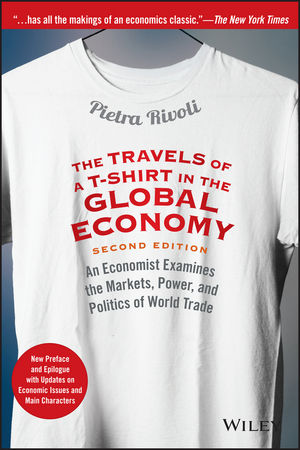
By title ‘The Travels of a T-Shirt in the Global Economy’, (Pietra Rivoli, 2005) sound like a potential lost classic of traceability. Unfortunately, it is not. A t-shirt is bought in Florida, screen-printed in Florida from a shirt made from Texan cotton in Shanghai. That is the coat hanger for the narrative, but of little substance to the overall book. The debates on the pros and cons of globalism are still here but have changed so much that the context for this book seems Jurassic. What we do get is a particular argument on how nations develop economically and that the bottom of the race to the bottom is progressively less deep. Long before food and energy textile supply chains achieved global reach and the results on working conditions have always been brutal. Rivoli foresaw that the apparel industry would eventually leave China. The Rana Plaza tragedy however shows how the deep the bottom can still be. There are interesting chapters on the ways the US textile sector managed to escape free market conditions and it ends with an overview of the 2nd life of donated clothing in Africa. It seems 2005 is long time ago.
https://www.wiley.com/en-us/The+Travels+of+a+T+Shirt+in+the+Global+Economy%3A+An+Economist+Examines+the+Markets%2C+Power%2C+and+Politics+of+World+Trade+New+Preface+and+Epilogue+with+Updates+on+Economic+Issues+and+Main+Characters%2C+2nd+Edition-p-97
By title ‘The Travels of a T-Shirt in the Global Economy’, (Pietra Rivoli, 2005) sound like a potential lost classic of traceability. Unfortunately, it is not. A t-shirt is bought in Florida, screen-printed in Florida from a shirt made from Texan cotton in Shanghai. That is the coat hanger for the narrative, but of little substance to the overall book. The debates on the pros and cons of globalism are still here but have changed so much that the context for this book seems Jurassic. What we do get is a particular argument on how nations develop economically and that the bottom of the race to the bottom is progressively less deep. Long before food and energy textile supply chains achieved global reach and the results on working conditions have always been brutal. Rivoli foresaw that the apparel industry would eventually leave China. The Rana Plaza tragedy however shows how the deep the bottom can still be. There are interesting chapters on the ways the US textile sector managed to escape free market conditions and it ends with an overview of the 2nd life of donated clothing in Africa. It seems 2005 is long time ago.
Book: Cannibals with Forks, The Triple Bottom Line of 21st Century Business
https://books.google.nl/books/about/Cannibals_with_Forks.html?id=dIJAbIM7XNcC
Market success will often depend upon a company's ability to satisfy the three-pronged fork of profitability, environmental quality, and social justice. This is the ur-text for market-driven certification schemes.
https://books.google.nl/books/about/Cannibals_with_Forks.html?id=dIJAbIM7XNcC
Market success will often depend upon a company's ability to satisfy the three-pronged fork of profitability, environmental quality, and social justice. This is the ur-text for market-driven certification schemes.
Novel, The Shipping Man
https://www.goodreads.com/book/show/12895441-the-shipping-man
When restless New York City hedge fund manager Robert Fairchild watches the Baltic Dry Cargo Index plunge 97%, registering an all-time high and a 25-year low within the span of just six months, he decides to buy a ship. Immediately fantasizing about naming a vessel after his wife, carrying a string of worry beads and being able to introduce himself as a "shipowner" at his upcoming college reunion, Fairchild immediately embarks on an odyssey into the most exclusive, glamorous and high stakes business in the world. From pirates off the coast of Somalia and on Wall Street to Greek and Norwegian shipping magnates, the education of Robert Fairchild is an expensive one. In the end, he loses his hedge fund, but he gains a life - as a Shipping Man. Part fast paced financial thriller, part ship finance text book, The Shipping Man is 310 pages of required reading for anyone with an interest in capital formation for shipping.
https://www.goodreads.com/book/show/12895441-the-shipping-man
When restless New York City hedge fund manager Robert Fairchild watches the Baltic Dry Cargo Index plunge 97%, registering an all-time high and a 25-year low within the span of just six months, he decides to buy a ship. Immediately fantasizing about naming a vessel after his wife, carrying a string of worry beads and being able to introduce himself as a "shipowner" at his upcoming college reunion, Fairchild immediately embarks on an odyssey into the most exclusive, glamorous and high stakes business in the world. From pirates off the coast of Somalia and on Wall Street to Greek and Norwegian shipping magnates, the education of Robert Fairchild is an expensive one. In the end, he loses his hedge fund, but he gains a life - as a Shipping Man. Part fast paced financial thriller, part ship finance text book, The Shipping Man is 310 pages of required reading for anyone with an interest in capital formation for shipping.
Book: Sinews of War and Trade
https://www.societyandspace.org/articles/sinews-of-war-and-trade
Sinews of War and Trade: Shipping and Capitalism in the Arabian Peninsula, Laleh Khalili highlights the centrality of shipping and maritime infrastructure to global capitalism.
https://www.societyandspace.org/articles/sinews-of-war-and-trade
Sinews of War and Trade: Shipping and Capitalism in the Arabian Peninsula, Laleh Khalili highlights the centrality of shipping and maritime infrastructure to global capitalism.
Book: Ninety Percent of Everything
https://en.wikipedia.org/wiki/Ninety_Percent_of_Everything
Inside Shipping, the Invisible Industry That Puts Clothes on Your Back, Gas in Your Car, And Food on Your Plate is a book by Rose George about the international shipping industry.
https://en.wikipedia.org/wiki/Ninety_Percent_of_Everything
Inside Shipping, the Invisible Industry That Puts Clothes on Your Back, Gas in Your Car, And Food on Your Plate is a book by Rose George about the international shipping industry.
Book: Certifying China
https://direct.mit.edu/books/oa-monograph/5271/Certifying-ChinaThe-Rise-and-Limits-of
A comprehensive study of the growth, potential, and limits of transnational eco-certification in China and the implications for other emerging economies. China has long prioritized economic growth over environmental protection. But in recent years, the country has become a global leader in the fight to save the planet by promoting clean energy, cutting air and water pollution, and developing a system of green finance. In Certifying China, Yixian Sun explores the potential and limits of transnational eco-certification in moving the world's most populous country toward sustainable consumption and production. He identifies the forces that drive companies from three sectors—seafood, palm oil, and tea—to embrace eco-certification. The success of eco-certification, he says, will depend on the extent to which it wins the support of domestic actors in fast-growing emerging economies.
https://direct.mit.edu/books/oa-monograph/5271/Certifying-ChinaThe-Rise-and-Limits-of
A comprehensive study of the growth, potential, and limits of transnational eco-certification in China and the implications for other emerging economies. China has long prioritized economic growth over environmental protection. But in recent years, the country has become a global leader in the fight to save the planet by promoting clean energy, cutting air and water pollution, and developing a system of green finance. In Certifying China, Yixian Sun explores the potential and limits of transnational eco-certification in moving the world's most populous country toward sustainable consumption and production. He identifies the forces that drive companies from three sectors—seafood, palm oil, and tea—to embrace eco-certification. The success of eco-certification, he says, will depend on the extent to which it wins the support of domestic actors in fast-growing emerging economies.