Home
| About
| Mine Tracker
| RSS
| Footer
▄▄▄▄▄▄▄▄▄▄▄▄▄▄▄▄▄▄▄▄▄▄▄▄▄▄▄▄▄▄▄▄▄▄▄▄▄▄▄▄▄▄▄▄▄▄▄▄▄▄▄▄▄▄▄▄▄▄▄▄▄▄▄▄▄▄▄▄▄▄▄▄▄▄▄▄▄▄▄▄▄▄▄▄▄▄▄▄▄▄▄▄▄▄▄▄
█▄▄░▄▄█░▄▄▀█░▄▄▀█▀▄▀█░▄▄███░▄▄▀█░▄▄▀█░▄▀███▄▄░▄▄█░▄▄▀█░▄▄▀█▀▄▀█░▄▄█░▄▄▀█░▄▄▀██▄██░███▄██▄░▄█░██░
███░███░▀▀▄█░▀▀░█░█▀█░▄▄███░▀▀░█░██░█░█░█████░███░▀▀▄█░▀▀░█░█▀█░▄▄█░▀▀░█░▄▄▀██░▄█░███░▄██░██░▀▀░
███░███▄█▄▄█▄██▄██▄██▄▄▄███▄██▄█▄██▄█▄▄██████░███▄█▄▄█▄██▄██▄██▄▄▄█▄██▄█▄▄▄▄█▄▄▄█▄▄█▄▄▄██▄██▀▀▀▄
▀▀▀▀▀▀▀▀▀▀▀▀▀▀▀▀▀▀▀▀▀▀▀▀▀▀▀▀▀▀▀▀▀▀▀▀▀▀▀▀▀▀▀▀▀▀▀▀▀▀▀▀▀▀▀▀▀▀▀▀▀▀▀▀▀▀▀▀▀▀▀▀▀▀▀▀▀▀▀▀▀▀▀▀▀▀▀▀▀▀▀▀▀▀▀▀
Book; Dawn Watch
https://blogs.lse.ac.uk/lsereviewofbooks/2018/01/17/long-read-review-the-dawn-watch-joseph-conrad-in-a-global-world-by-maya-jasanoff/
In her smoothly written and ingeniously constructed new book, The Dawn Watch: Joseph Conrad in a Global World, Harvard historian Maya Jasanoff offers the life and work of the novelist Joseph Conrad as a tool with which to untangle the railroads, steamship routes and telegraph cables that made the world smaller in the nineteenth century. Born Józef Teodor Konrad Korzeniowski in 1857 to Polish nationalists in exile in imperial Russia, Conrad spent the first 40 years of his life as a young immigrant in London and as a sailor in the French and British merchant marines. In the late 1890s he settled permanently in England and began his career as a novelist. Conrad’s personal history and geography, from Russia to the Congo, Jasanoff argues, shows a ‘global world’ in the making: his fiction offers a meditation on coping with that new world. Since most of Conrad’s papers are from his writing life, Jasanoff finds Conrad’s maritime life by triangulating between archival records, broader historical contexts and four of his most famous novels, The Secret Agent, Lord Jim, Heart of Darkness and Nostromo, published between 1899 and 1907.
https://blogs.lse.ac.uk/lsereviewofbooks/2018/01/17/long-read-review-the-dawn-watch-joseph-conrad-in-a-global-world-by-maya-jasanoff/
In her smoothly written and ingeniously constructed new book, The Dawn Watch: Joseph Conrad in a Global World, Harvard historian Maya Jasanoff offers the life and work of the novelist Joseph Conrad as a tool with which to untangle the railroads, steamship routes and telegraph cables that made the world smaller in the nineteenth century. Born Józef Teodor Konrad Korzeniowski in 1857 to Polish nationalists in exile in imperial Russia, Conrad spent the first 40 years of his life as a young immigrant in London and as a sailor in the French and British merchant marines. In the late 1890s he settled permanently in England and began his career as a novelist. Conrad’s personal history and geography, from Russia to the Congo, Jasanoff argues, shows a ‘global world’ in the making: his fiction offers a meditation on coping with that new world. Since most of Conrad’s papers are from his writing life, Jasanoff finds Conrad’s maritime life by triangulating between archival records, broader historical contexts and four of his most famous novels, The Secret Agent, Lord Jim, Heart of Darkness and Nostromo, published between 1899 and 1907.
PDF; Our Common Future
https://sustainabledevelopment.un.org/content/documents/5987our-common-future.pdf
In the middle of the 20th century, we saw our planet from space for the first time. Historians may eventually find that this vision had a greater impact on thought than did the Copernican revolution of the 16th century, which upset the human self-image by revealing that the Earth is not the centre of the universe. From space, we see a small and fragile ball dominated not by human activity and edifice but by a pattern of clouds, oceans, greenery, and soils. Humanity's inability to fit its activities into that pattern is changing planetary systems, fundamentally. Many such changes are accompanied by life-threatening hazards. This new reality, from which there is no escape, must be recognized - and managed.
https://sustainabledevelopment.un.org/content/documents/5987our-common-future.pdf
In the middle of the 20th century, we saw our planet from space for the first time. Historians may eventually find that this vision had a greater impact on thought than did the Copernican revolution of the 16th century, which upset the human self-image by revealing that the Earth is not the centre of the universe. From space, we see a small and fragile ball dominated not by human activity and edifice but by a pattern of clouds, oceans, greenery, and soils. Humanity's inability to fit its activities into that pattern is changing planetary systems, fundamentally. Many such changes are accompanied by life-threatening hazards. This new reality, from which there is no escape, must be recognized - and managed.
Our Common Future
https://en.wikipedia.org/wiki/Our_Common_Future
Our Common Future, also known as the Brundtland Report, was published in October 1987 by the United Nations through the Oxford University Press. This publication was in recognition of Gro Harlem Brundtland, former Norwegian Prime Minister and Chair of the World Commission on Environment and Development (WCED). Its targets were multilateralism and interdependence of nations in the search for a sustainable development path. The report sought to recapture the spirit of the Stockholm Conference which had introduced environmental concerns to the formal political development sphere. Our Common Future placed environmental issues firmly on the political agenda; it aimed to discuss the environment and development as one single issue.
https://en.wikipedia.org/wiki/Our_Common_Future
Our Common Future, also known as the Brundtland Report, was published in October 1987 by the United Nations through the Oxford University Press. This publication was in recognition of Gro Harlem Brundtland, former Norwegian Prime Minister and Chair of the World Commission on Environment and Development (WCED). Its targets were multilateralism and interdependence of nations in the search for a sustainable development path. The report sought to recapture the spirit of the Stockholm Conference which had introduced environmental concerns to the formal political development sphere. Our Common Future placed environmental issues firmly on the political agenda; it aimed to discuss the environment and development as one single issue.
Paper; Monitoring Global Supply Chains
https://dash.harvard.edu/bitstream/handle/1/11591700/short%252ctoffel%252chugill_monitoring-global-supply-chains.pdf
Firms seeking to avoid reputational spillovers that can arise from dangerous, illegal, and unethical behavior at supply chain factories are increasingly relying on private social auditors to provide strategic information about suppliers’ conduct. But little is known about what influences auditors’ ability to identify and report problems. Our analysis of nearly 17,000 supplier audits reveals that auditors report fewer violations when individual auditors have audited the factory before, when audit teams are less experienced or less trained, when audit teams are all-male, and when audits are paid for by the audited supplier. This first comprehensive and systematic analysis of supply chain monitoring identifies previously overlooked transaction costs and suggests strategies to develop governance structures to mitigate reputational risks by reducing information asymmetries in supply chains.
https://dash.harvard.edu/bitstream/handle/1/11591700/short%252ctoffel%252chugill_monitoring-global-supply-chains.pdf
Firms seeking to avoid reputational spillovers that can arise from dangerous, illegal, and unethical behavior at supply chain factories are increasingly relying on private social auditors to provide strategic information about suppliers’ conduct. But little is known about what influences auditors’ ability to identify and report problems. Our analysis of nearly 17,000 supplier audits reveals that auditors report fewer violations when individual auditors have audited the factory before, when audit teams are less experienced or less trained, when audit teams are all-male, and when audits are paid for by the audited supplier. This first comprehensive and systematic analysis of supply chain monitoring identifies previously overlooked transaction costs and suggests strategies to develop governance structures to mitigate reputational risks by reducing information asymmetries in supply chains.
Book; Private Regulation of Labor Standards in Global Supply Chains: Problems, Progress, and Prospec
https://www.jstor.org/stable/10.7591/j.ctv16kkx12
Private Regulation of Labor Standards in Global Supply Chains examines the effectiveness of corporate social responsibility on improving labor standards in global supply chains. Sarosh Kuruvilla charts the development and effectiveness of corporate codes of conduct to ameliorate "sweatshop" conditions in global supply chains. This form of private voluntary regulation, spearheaded by Nike and Reebok, became necessary given the inability of third world countries to enforce their own laws and the absence of a global regulatory system for labor standards. Although private regulation programs have been adopted by other companies in many different industries, we know relatively little regarding the effectiveness of these programs because companies don't disclose information about their efforts and outcomes in regulating labor conditions in their supply chains. Private Regulation of Labor Standards in Global Supply Chains presents data from companies, multi-stakeholder institutions, and auditing firms in a comprehensive, investigative dive into the world of private voluntary regulation of labor conditions. The picture he paints is wholistic and raw, but it considers several ways in which this private voluntary system can be improved to improve the lives of workers in global supply chains.
https://www.jstor.org/stable/10.7591/j.ctv16kkx12
Private Regulation of Labor Standards in Global Supply Chains examines the effectiveness of corporate social responsibility on improving labor standards in global supply chains. Sarosh Kuruvilla charts the development and effectiveness of corporate codes of conduct to ameliorate "sweatshop" conditions in global supply chains. This form of private voluntary regulation, spearheaded by Nike and Reebok, became necessary given the inability of third world countries to enforce their own laws and the absence of a global regulatory system for labor standards. Although private regulation programs have been adopted by other companies in many different industries, we know relatively little regarding the effectiveness of these programs because companies don't disclose information about their efforts and outcomes in regulating labor conditions in their supply chains. Private Regulation of Labor Standards in Global Supply Chains presents data from companies, multi-stakeholder institutions, and auditing firms in a comprehensive, investigative dive into the world of private voluntary regulation of labor conditions. The picture he paints is wholistic and raw, but it considers several ways in which this private voluntary system can be improved to improve the lives of workers in global supply chains.
Archaeologies of the Belt and Road Initiative
https://madeinchinajournal.com/2021/12/01/archaeologies-of-the-belt-and-road-initiative/
Since its announcement in 2013, the Belt and Road Initiative (BRI) has become the main lens through which both observers and stakeholders trace China’s global footprint. Whether cheered on as a new engine of economic development in a fraught and increasingly unequal world or frowned upon as a masterplan through which the Chinese authorities are attempting to establish global hegemony, the infrastructure component of the BRI has become such an important frame in discussions of Global China that less tangible aspects that are not in its purview tend to be lost or overlooked.
https://madeinchinajournal.com/2021/12/01/archaeologies-of-the-belt-and-road-initiative/
Since its announcement in 2013, the Belt and Road Initiative (BRI) has become the main lens through which both observers and stakeholders trace China’s global footprint. Whether cheered on as a new engine of economic development in a fraught and increasingly unequal world or frowned upon as a masterplan through which the Chinese authorities are attempting to establish global hegemony, the infrastructure component of the BRI has become such an important frame in discussions of Global China that less tangible aspects that are not in its purview tend to be lost or overlooked.
Article; Electric mountain, The beauty of infrastructure
https://www.theguardian.com/news/2023/nov/02/beauty-of-infrastructure-electric-mountain-dinorwig-power-station-north-wales
https://www.theguardian.com/news/2023/nov/02/beauty-of-infrastructure-electric-mountain-dinorwig-power-station-north-wales
Infrastructural systems are more than just technical – they are social and political. They are shaped by the sustained relationships of the people who live in the places they connect, and they also form part of that relationship. They can’t easily be valued or assessed like a consumer good, where it’s “worth it” to buy something or not. Deciding to buy a car has little in common with deciding when, where and how to build the roads to drive it on. So infrastructural systems don’t lend themselves to decision-making that focuses solely on the costs or the returns on investment.
An infrastructural network can encode and promote a set of values: everyone should have access to clean water, or electricity is a necessity, or personal mobility is a human right, or a healthy population is important, or broadband access is required to fully participate in civic society, or even endangered fish should be protected. While infrastructural systems can meet basic human needs, providing agency and freedom, the specific form they take depends on cultural norms and expectations; in turn, the systems set and define those norms and expectations.
Book; Dead in the Water
https://www.matthew-campbell.com/dead-in-the-water
Dead in the Water is a shocking expose of the corrupt inner workings of international shipping, told through the lens of the Brillante hijacking and its aftermath. Through first-hand accounts of those who lived it—from members of the ship’s crew and witnesses to the attacks, to the ex-London detectives turned private investigators seeking to solve Mockett’s murder and bring justice to his family—award-winning Bloomberg reporters Matthew Campbell and Kit Chellel piece together the astounding truth behind one of the most brazen financial frauds in history.
https://www.matthew-campbell.com/dead-in-the-water
Dead in the Water is a shocking expose of the corrupt inner workings of international shipping, told through the lens of the Brillante hijacking and its aftermath. Through first-hand accounts of those who lived it—from members of the ship’s crew and witnesses to the attacks, to the ex-London detectives turned private investigators seeking to solve Mockett’s murder and bring justice to his family—award-winning Bloomberg reporters Matthew Campbell and Kit Chellel piece together the astounding truth behind one of the most brazen financial frauds in history.
Outlaw Ocean: The China Report
https://www.theoutlawocean.com/investigations/china-the-superpower-of-seafood/

Since then, China has invested heavily in its fleet. The country now catches more than five billion pounds of seafood a year through distant-water fishing, the biggest portion of it squid. China’s seafood industry, which is estimated to be worth more than thirty-five billion dollars, accounts for a fifth of the international trade, and has helped create fifteen million jobs. The Chinese state owns much of the industry—including some twenty per cent of its squid ships—and oversees the rest through the Overseas Fisheries Association. Today, the nation consumes more than a third of the world’s fish.
https://www.theoutlawocean.com/investigations/china-the-superpower-of-seafood/
Since then, China has invested heavily in its fleet. The country now catches more than five billion pounds of seafood a year through distant-water fishing, the biggest portion of it squid. China’s seafood industry, which is estimated to be worth more than thirty-five billion dollars, accounts for a fifth of the international trade, and has helped create fifteen million jobs. The Chinese state owns much of the industry—including some twenty per cent of its squid ships—and oversees the rest through the Overseas Fisheries Association. Today, the nation consumes more than a third of the world’s fish.
Article; Global Race for Lithium Lands in Rural Brazil
https://nacla.org/global-race-lithium-brazil
The global energy transition is set to require a staggering increase in the lithium supply. An essential element in EV batteries, demand could increase as much as 42 times over two decades according to International Energy Agency projections. Jequitinhonha Valley sits on 85 percent of Brazil's known lithium deposits, which has sparked a race to invest and develop. In May, Minas Gerais governor Romeu Zema and Brazilian federal officials traveled to Nasdaq in New York to launch the “Lithium Valley” project, looking for international investors for the lithium mining companies operating in the region. A "Preserve the Environment!" sign representing the Araçuaí Environmental Secretary and Sigma Lithium (Sam Klein-Markman) A "Preserve the Environment!" sign representing the Araçuaí Environmental Secretary and Sigma Lithium (Sam Klein-Markman) The Valley of Opportunity? In promoting this investment, officials are making the case that lithium mining will remake the long-neglected region into a “valley of opportunity.” Central to that campaign is Sigma Lithium, which began production in April, the first of the new mining companies in the region to do so. Sigma promises to produce a “green” lithium using renewable energy and 90 percent recycled water, to hire local, and to voluntarily invest more than the country requires in local municipalities and environmental projects. Sigma expects its Grota do Cirilo mining site to be in production for 13 years, generating over $5 billion for the company and over $200 million in payments to local municipalities. This year, the company expects to pay around $10.7 million to Araçuaí and its neighboring town Itinga, just under a tenth of the two municipalities’ combined GDP according to data from Brazil’s 2022 census. Sigma has also instituted programs to construct wells for rural communities, create lines of microcredit for local women entrepreneurs, and pay for the preservation of local forest land. Even so, as the region appears to be undergoing a transformative lithium boom, there is growing concern about the costs for rural communities that are most vulnerable to the environmental impacts of mining, and about whether local governments can translate the presence of international mining businesses into lasting gains for the region’s residents. The Movement for People Affected by Dams (MAB) has been campaigning against the advance of lithium mining, citing inevitable environmental degradation, water-intensive practices, and the opposition of federally protected quilombo communities—settlements generally founded by escap
https://nacla.org/global-race-lithium-brazil
The global energy transition is set to require a staggering increase in the lithium supply. An essential element in EV batteries, demand could increase as much as 42 times over two decades according to International Energy Agency projections. Jequitinhonha Valley sits on 85 percent of Brazil's known lithium deposits, which has sparked a race to invest and develop. In May, Minas Gerais governor Romeu Zema and Brazilian federal officials traveled to Nasdaq in New York to launch the “Lithium Valley” project, looking for international investors for the lithium mining companies operating in the region. A "Preserve the Environment!" sign representing the Araçuaí Environmental Secretary and Sigma Lithium (Sam Klein-Markman) A "Preserve the Environment!" sign representing the Araçuaí Environmental Secretary and Sigma Lithium (Sam Klein-Markman) The Valley of Opportunity? In promoting this investment, officials are making the case that lithium mining will remake the long-neglected region into a “valley of opportunity.” Central to that campaign is Sigma Lithium, which began production in April, the first of the new mining companies in the region to do so. Sigma promises to produce a “green” lithium using renewable energy and 90 percent recycled water, to hire local, and to voluntarily invest more than the country requires in local municipalities and environmental projects. Sigma expects its Grota do Cirilo mining site to be in production for 13 years, generating over $5 billion for the company and over $200 million in payments to local municipalities. This year, the company expects to pay around $10.7 million to Araçuaí and its neighboring town Itinga, just under a tenth of the two municipalities’ combined GDP according to data from Brazil’s 2022 census. Sigma has also instituted programs to construct wells for rural communities, create lines of microcredit for local women entrepreneurs, and pay for the preservation of local forest land. Even so, as the region appears to be undergoing a transformative lithium boom, there is growing concern about the costs for rural communities that are most vulnerable to the environmental impacts of mining, and about whether local governments can translate the presence of international mining businesses into lasting gains for the region’s residents. The Movement for People Affected by Dams (MAB) has been campaigning against the advance of lithium mining, citing inevitable environmental degradation, water-intensive practices, and the opposition of federally protected quilombo communities—settlements generally founded by escap
PDF: Towards more accurate and policy relevant footprint analyses
http://resources.trase.earth/documents/Godar%20et%20al.%20(2015)%20Ecological%20Economics.pdf
The consumption of internationally traded goods causes multiple socio-environmental impacts. Current methods linking production impacts to final consumption typically trace the origin of products back to the country level, lacking fine-scale spatial resolution. This hampers accurate calculation of trade and consumption footprints, masking and distorting the causal links between consumers' choices and their environmental impacts, especially in countries with large spatial variability in socio-environmental conditions and production impacts. Here we present the SEI-PCS model (Spatially Explicit Information on Production to Consumption Systems), which allows for fine-scale sub-national assessments of the origin of, and socio-environmental impacts embedded in, traded commodities. The method connects detailed production data at sub-national scales (e.g., municipalities or provinces), information on domestic flows of goods and in international trade. The model permits the downscaling of country-to-country trade analyses based on either physical allocation from bilateral trade matrices or MRIO models. The importance of producing more spatially-explicit trade analyses is illustrated by identifying the municipalities of Brazil from which different countries source the Brazilian soy they consume. Applications for improving consumption accounting and policy assessment are discussed, including quantification of externalities of consumption, consumer labeling, trade leakages, sustainable resource supply and traceability
http://resources.trase.earth/documents/Godar%20et%20al.%20(2015)%20Ecological%20Economics.pdf
The consumption of internationally traded goods causes multiple socio-environmental impacts. Current methods linking production impacts to final consumption typically trace the origin of products back to the country level, lacking fine-scale spatial resolution. This hampers accurate calculation of trade and consumption footprints, masking and distorting the causal links between consumers' choices and their environmental impacts, especially in countries with large spatial variability in socio-environmental conditions and production impacts. Here we present the SEI-PCS model (Spatially Explicit Information on Production to Consumption Systems), which allows for fine-scale sub-national assessments of the origin of, and socio-environmental impacts embedded in, traded commodities. The method connects detailed production data at sub-national scales (e.g., municipalities or provinces), information on domestic flows of goods and in international trade. The model permits the downscaling of country-to-country trade analyses based on either physical allocation from bilateral trade matrices or MRIO models. The importance of producing more spatially-explicit trade analyses is illustrated by identifying the municipalities of Brazil from which different countries source the Brazilian soy they consume. Applications for improving consumption accounting and policy assessment are discussed, including quantification of externalities of consumption, consumer labeling, trade leakages, sustainable resource supply and traceability
SEI-PCS: Spatially Explicit Information on Production to Consumption Systems
https://www.sei.org/wp-content/uploads/2019/03/sei-2019-p2cs-summary-sei-pcs.pdf

Countries, companies and individual consumers are increasingly aware that their consumption could be linked, via supply chains, to environmental and social sustainability impacts in distant parts of the world. However, most of the footprinting methods available prior to 2015 critically lacked detail – of the connections between consumption and production, and of how particular commodity flows were linked to sustainability issues in specific production sites. Instead, they estimated footprints at country level, based on assumptions and macroeconomic figures.
This limited their value for policymaking, attributing responsibility and taking preventive action, given the often localized nature of issues like deforestation, as well as the heterogeneity of landscapes and vulnerability that can exist, particularly in large countries like Brazil. br>
SEI-PCS (for Spatially Explicit Information on Production to Consumption Systems) is a modeling approach developed at SEI.1 SEI-PCS allows for fine-scale subnational assessments of the origin of traded commodities and the socio-environmental impacts embedded in them, such as carbon emissions, local pollution or biodiversity loss. It recreates supply chains and attributes sustainability impacts to commodity flows and actors, using a combination of detailed production data at subnational scales, information on domestic trade flows, customs data and international trade flows between countries.
https://www.sei.org/wp-content/uploads/2019/03/sei-2019-p2cs-summary-sei-pcs.pdf
Countries, companies and individual consumers are increasingly aware that their consumption could be linked, via supply chains, to environmental and social sustainability impacts in distant parts of the world. However, most of the footprinting methods available prior to 2015 critically lacked detail – of the connections between consumption and production, and of how particular commodity flows were linked to sustainability issues in specific production sites. Instead, they estimated footprints at country level, based on assumptions and macroeconomic figures.
This limited their value for policymaking, attributing responsibility and taking preventive action, given the often localized nature of issues like deforestation, as well as the heterogeneity of landscapes and vulnerability that can exist, particularly in large countries like Brazil. br>
SEI-PCS (for Spatially Explicit Information on Production to Consumption Systems) is a modeling approach developed at SEI.1 SEI-PCS allows for fine-scale subnational assessments of the origin of traded commodities and the socio-environmental impacts embedded in them, such as carbon emissions, local pollution or biodiversity loss. It recreates supply chains and attributes sustainability impacts to commodity flows and actors, using a combination of detailed production data at subnational scales, information on domestic trade flows, customs data and international trade flows between countries.
Article; Leefbaar loon voor theeplukkers lijkt uit zicht na overname van Unilevers theedivisie
https://www.ftm.nl/artikelen/leefbaar-loon-voor-unilevers-theeplukkers-uit-zicht?share=MuxZbTTOr6W5BG7HAaXhNkG2zyTrpkz2U1Zu46dabMF2fTfxbuhc0iqONXNCQZs%3D
Na een jarenlange stroom van misstanden in de productieketen en stokkende omzet verkocht Unilever zijn theebusiness, met merken als Lipton en Pukka, vorig jaar aan private equity investeerder CVC Capital. Voor kwetsbare theeplukkers in de keten werd het er niet beter op. ‘Dit zal de problemen die er nu al in de theesector zijn verergeren, zoals uitbuiting, lage lonen en misbruik.’
https://www.ftm.nl/artikelen/leefbaar-loon-voor-unilevers-theeplukkers-uit-zicht?share=MuxZbTTOr6W5BG7HAaXhNkG2zyTrpkz2U1Zu46dabMF2fTfxbuhc0iqONXNCQZs%3D
Na een jarenlange stroom van misstanden in de productieketen en stokkende omzet verkocht Unilever zijn theebusiness, met merken als Lipton en Pukka, vorig jaar aan private equity investeerder CVC Capital. Voor kwetsbare theeplukkers in de keten werd het er niet beter op. ‘Dit zal de problemen die er nu al in de theesector zijn verergeren, zoals uitbuiting, lage lonen en misbruik.’
Article; How Rana Plaza catalyzed a transparency movement and the lessons learned on opening data at
https://www.linkedin.com/pulse/how-rana-plaza-catalyzed-transparency-movement-lessons-grillon/
April 24, 2023 marked the 10 year anniversary of the Rana Plaza building collapse in Dhaka, Bangladesh, an industrial tragedy of unprecedented scale in which over 1,110 people died and more than 2,500 were left injured. In the immediate aftermath, activists on the ground dug through rubble trying to find clothing with tags to identify who might be held accountable. The collapse left families forever changed; husbands, wives, sisters and brothers lost; children left without mothers. While the conditions which led to the accident and the longer term worker advocacy efforts which followed have, rightly, been widely covered elsewhere, the accident led to a shift in the apparel sector. It catapulted issues of abuse and neglect in apparel supply chains into the global public consciousness, giving campaigners who had been active in this sector for many years previously a more visible platform for their activism. What did this look like in practice?
https://www.linkedin.com/pulse/how-rana-plaza-catalyzed-transparency-movement-lessons-grillon/
April 24, 2023 marked the 10 year anniversary of the Rana Plaza building collapse in Dhaka, Bangladesh, an industrial tragedy of unprecedented scale in which over 1,110 people died and more than 2,500 were left injured. In the immediate aftermath, activists on the ground dug through rubble trying to find clothing with tags to identify who might be held accountable. The collapse left families forever changed; husbands, wives, sisters and brothers lost; children left without mothers. While the conditions which led to the accident and the longer term worker advocacy efforts which followed have, rightly, been widely covered elsewhere, the accident led to a shift in the apparel sector. It catapulted issues of abuse and neglect in apparel supply chains into the global public consciousness, giving campaigners who had been active in this sector for many years previously a more visible platform for their activism. What did this look like in practice?
PDF; Towards a Digital Product Passport Fit for Contributing to a Circular Economy
https://www.mdpi.com/1996-1073/14/8/2289
The Digital Product Passport (DPP) is a concept of a policy instrument particularly pushed by policy circles to contribute to a circular economy. The preliminary design of the DPP is supposed to have product-related information compiled mainly by manufactures and, thus, to provide the basis for more circular products. Given the lack of scientific debate on the DPP, this study seeks to work out design options of the DPP and how these options might benefit stakeholders in a product’s value chain.
https://www.mdpi.com/1996-1073/14/8/2289
The Digital Product Passport (DPP) is a concept of a policy instrument particularly pushed by policy circles to contribute to a circular economy. The preliminary design of the DPP is supposed to have product-related information compiled mainly by manufactures and, thus, to provide the basis for more circular products. Given the lack of scientific debate on the DPP, this study seeks to work out design options of the DPP and how these options might benefit stakeholders in a product’s value chain.
Article: A proposed universal definition of a Digital Product Passport Ecosystem (DPPE): Worldviews,
https://www.sciencedirect.com/science/article/pii/S0959652622051125
This paper contributes new knowledge and understanding about the role that Product Passports might play in advancing sustainable business practices towards a Circular Economy. The significance of this research is the proposed universal definition of a Digital Product Passport Ecosystem (DPPE) for international policy, industrial and technical communities. The novelty of this research lies in the systems thinking approach, coupled with systems engineering, to define and model a DPPE as a System of Systems to derive a definition. Stakeholder perspectives and requirements concerning Product Passports were synthesised using data and analysis from the European Commission's (EC) open consultation on the Sustainable Products Initiative (SPI). Nine high-level capabilities of a DPPE have been identified, and each is explored by mapping a list of information requirements discussed within the consultation. It is shown that different Product Passport applications benefit (or detriment) different stakeholder groups.
https://www.sciencedirect.com/science/article/pii/S0959652622051125
This paper contributes new knowledge and understanding about the role that Product Passports might play in advancing sustainable business practices towards a Circular Economy. The significance of this research is the proposed universal definition of a Digital Product Passport Ecosystem (DPPE) for international policy, industrial and technical communities. The novelty of this research lies in the systems thinking approach, coupled with systems engineering, to define and model a DPPE as a System of Systems to derive a definition. Stakeholder perspectives and requirements concerning Product Passports were synthesised using data and analysis from the European Commission's (EC) open consultation on the Sustainable Products Initiative (SPI). Nine high-level capabilities of a DPPE have been identified, and each is explored by mapping a list of information requirements discussed within the consultation. It is shown that different Product Passport applications benefit (or detriment) different stakeholder groups.
PDF; Turbulent Circulation
https://eprints.soas.ac.uk/26197/3/Introduction%20-%202018.05.23%20revised%20for%20EPD.pdf
Since the mid-20th century, logistics has evolved into a wide-ranging science of circulation involved in planning and managing flows of innumerable kinds. In this introductory essay, we take stock of the ascendancy and proliferation of logistics, proposing a critical engagement with the field. We argue that logistics is not limited to the management of supply chains, military or corporate. Rather, it is better understood as a calculative logic and spatial practice of circulation that is at the fore of the reorganization of capitalism and war. Viewed from this perspective, the rise of logistics has transformed not only the physical movement of materials but also the very rationality by which space is organized. It has remade economic and military space according to a universalizing logic of abstract flow, exacerbating existing patterns of uneven geographical development.
https://eprints.soas.ac.uk/26197/3/Introduction%20-%202018.05.23%20revised%20for%20EPD.pdf
Since the mid-20th century, logistics has evolved into a wide-ranging science of circulation involved in planning and managing flows of innumerable kinds. In this introductory essay, we take stock of the ascendancy and proliferation of logistics, proposing a critical engagement with the field. We argue that logistics is not limited to the management of supply chains, military or corporate. Rather, it is better understood as a calculative logic and spatial practice of circulation that is at the fore of the reorganization of capitalism and war. Viewed from this perspective, the rise of logistics has transformed not only the physical movement of materials but also the very rationality by which space is organized. It has remade economic and military space according to a universalizing logic of abstract flow, exacerbating existing patterns of uneven geographical development.
PDF; Short Circuit the Counter Logistics reader
https://desarquivo.org/sites/default/files/short_circuit_a_counterlogistics_reader.pdf
Counter-logistics is not simply a matter of blocking all flows, of stopping movement, of locking things in place where they are. It is a matter of blocking those flows that constitute the material and metaphysical tissue of this world, while simultaneously enhancing our own ethical connections, movement, and friendship. Helping migrants to cross borders and remain undetected, helping information to cross through and within prison walls, destroying surveillance cameras, defending the basis of new worlds seized in opposition to the old—these are as important as blocking rail lines and disrupting commerce
https://desarquivo.org/sites/default/files/short_circuit_a_counterlogistics_reader.pdf
Counter-logistics is not simply a matter of blocking all flows, of stopping movement, of locking things in place where they are. It is a matter of blocking those flows that constitute the material and metaphysical tissue of this world, while simultaneously enhancing our own ethical connections, movement, and friendship. Helping migrants to cross borders and remain undetected, helping information to cross through and within prison walls, destroying surveillance cameras, defending the basis of new worlds seized in opposition to the old—these are as important as blocking rail lines and disrupting commerce
Article; Shipping Doesn’t Do What Everyone Says it Does
https://weirdeconomies.com/contributions/producing-circulation
One way that we’ve been thinking about logistics recently is as a project of time management, at planetary scale. Logistics seems to no longer be the annihilation of space by time, but the management of time (or contingency, or money) through the perceived capacity to manipulate space — bigger ships, more containers, and bigger ports to accommodate them. But as it becomes harder and harder to sustain the promise of things moved quickly, the whole thing begins to collapse. One question that lies at the forefront of much recent attention to supply chains and commodity flows is, ‘can the current map of financial flows survive a remapping of the world’s shipping system?’. A more pragmatic question might be whether the shipping system can survive its own financially-minded, oligopolistic death drive — or even, in its current bloated state, if it should. Virilio famously said that the invention of the ship is the invention of the shipwreck. To return to where we started, now it seems as though the mass shipwreck is the inauguration of shipping’s weird new era.
https://weirdeconomies.com/contributions/producing-circulation
One way that we’ve been thinking about logistics recently is as a project of time management, at planetary scale. Logistics seems to no longer be the annihilation of space by time, but the management of time (or contingency, or money) through the perceived capacity to manipulate space — bigger ships, more containers, and bigger ports to accommodate them. But as it becomes harder and harder to sustain the promise of things moved quickly, the whole thing begins to collapse. One question that lies at the forefront of much recent attention to supply chains and commodity flows is, ‘can the current map of financial flows survive a remapping of the world’s shipping system?’. A more pragmatic question might be whether the shipping system can survive its own financially-minded, oligopolistic death drive — or even, in its current bloated state, if it should. Virilio famously said that the invention of the ship is the invention of the shipwreck. To return to where we started, now it seems as though the mass shipwreck is the inauguration of shipping’s weird new era.
Article; Logistics, Counterlogistics and the Communist Prospect
https://endnotes.org.uk/articles/logistics-counterlogistics-and-the-communist-prospect
Today’s supply chains are distinguished not just by their planetary extension and incredible speed but by their direct integration of manufacture and retail, their harmonisation of the rhythms of production and consumption. Since the 1980s, business writers have touted the value of “lean” and “flexible” production models, in which suppliers maintain the capacity to expand and contract production, as well as change the types of commodities produced, by relying on a network of subcontractors, temporary workers, and mutable organisational structures, adaptations that require precise control over the flow of goods and information between units. Originally associated with the Toyota Production System, and Japanese manufacturers in general, these corporate forms are now frequently identified with the loose moniker Just In Time (JIT), which refers in the specific sense to a form of inventory management and in general to a production philosophy in which firms aim to eliminate standing inventory (whether produced in-house or received from suppliers). Derived in part from the Japanese and in part from Anglo-American cybernetics, JIT is a circulationist production philosophy, oriented around a concept of “continuous flow” that views everything not in motion as a form of waste (muda), a drag on profits. JIT aims to submit all production to the condition of circulation, pushing its velocity as far toward the light-speed of information transmission as possible. From the perspective of our blockaders, this emphasis on the quick and continuous flow of commodities multiplies the power of the blockade. In the absence of standing inventories, a blockade of just a few days could effectively paralyse many manufacturers and retailers.
https://endnotes.org.uk/articles/logistics-counterlogistics-and-the-communist-prospect
Today’s supply chains are distinguished not just by their planetary extension and incredible speed but by their direct integration of manufacture and retail, their harmonisation of the rhythms of production and consumption. Since the 1980s, business writers have touted the value of “lean” and “flexible” production models, in which suppliers maintain the capacity to expand and contract production, as well as change the types of commodities produced, by relying on a network of subcontractors, temporary workers, and mutable organisational structures, adaptations that require precise control over the flow of goods and information between units. Originally associated with the Toyota Production System, and Japanese manufacturers in general, these corporate forms are now frequently identified with the loose moniker Just In Time (JIT), which refers in the specific sense to a form of inventory management and in general to a production philosophy in which firms aim to eliminate standing inventory (whether produced in-house or received from suppliers). Derived in part from the Japanese and in part from Anglo-American cybernetics, JIT is a circulationist production philosophy, oriented around a concept of “continuous flow” that views everything not in motion as a form of waste (muda), a drag on profits. JIT aims to submit all production to the condition of circulation, pushing its velocity as far toward the light-speed of information transmission as possible. From the perspective of our blockaders, this emphasis on the quick and continuous flow of commodities multiplies the power of the blockade. In the absence of standing inventories, a blockade of just a few days could effectively paralyse many manufacturers and retailers.
Article: Can Cybersocialist Planning Become a Reality?
https://jacobin.com/2023/04/cybersocialism-economic-planning-marxism-information-theory-econophysics
The digital revolution of recent decades allows for much more developed resource allocation than was possible in the 20th century. Cybersocialist planning, some argue, can provide for a rational allocation of resources, under real democratic control.
https://jacobin.com/2023/04/cybersocialism-economic-planning-marxism-information-theory-econophysics
The digital revolution of recent decades allows for much more developed resource allocation than was possible in the 20th century. Cybersocialist planning, some argue, can provide for a rational allocation of resources, under real democratic control.
Article: Cybernetics of the Future
https://cosmonautmag.com/2022/07/glushkov-and-his-ideas-cybernetics-of-the-future-by-vasiliy-pikhorovich/
As capitalist waste leads to more and more obviously ecological devastation, we communists must be louder in proclaiming that another world is possible. Opposed to the anarchy of the market is the idea of a planned economy, and more specifically a socialist one. The centennial objection to planning is that it is impossible to plan something as complex as the economy that results from millions of agents making billions of transactions. However, with computers that are becoming smarter every day and increasingly capable of solving some of the most complex problems in the world, why should economic planning be excluded from these advances?
https://cosmonautmag.com/2022/07/glushkov-and-his-ideas-cybernetics-of-the-future-by-vasiliy-pikhorovich/
As capitalist waste leads to more and more obviously ecological devastation, we communists must be louder in proclaiming that another world is possible. Opposed to the anarchy of the market is the idea of a planned economy, and more specifically a socialist one. The centennial objection to planning is that it is impossible to plan something as complex as the economy that results from millions of agents making billions of transactions. However, with computers that are becoming smarter every day and increasingly capable of solving some of the most complex problems in the world, why should economic planning be excluded from these advances?
Article: Big Business games the supply chain
https://prospect.org/economy/big-business-games-the-supply-chain/
Big-box stores, however, have circumvented many of the bottlenecks. Amazon, Walmart, and other giants have maintained their inventory by expanding logistics operations and striking deals with suppliers, allowing them to get products quicker and cheaper than their smaller rivals. Though the maneuvers keep consumers happy, small businesses have suffered: They wait longer for goods, pay more for shipping, and lose business as customers flock to big-box stores.
https://prospect.org/economy/big-business-games-the-supply-chain/
Big-box stores, however, have circumvented many of the bottlenecks. Amazon, Walmart, and other giants have maintained their inventory by expanding logistics operations and striking deals with suppliers, allowing them to get products quicker and cheaper than their smaller rivals. Though the maneuvers keep consumers happy, small businesses have suffered: They wait longer for goods, pay more for shipping, and lose business as customers flock to big-box stores.
Article: Hidden costs of containerization
https://prospect.org/economy/hidden-costs-of-containerization/
It’s no exaggeration to say that the rise of the shipping container revolutionized the global economy. The abundance of plentiful and cheap goods we have become accustomed to finding at our local Walmart would not exist without the shipping container. Containerization drastically reduced the expense of international trade and increased the speed at which goods are delivered. Today, more than 60 percent of the world’s consumer goods, nearly $14 trillion worth of everything from iPhones to Chiquita bananas, are transported this way. Practically everything we own, will own, or ever want to own has been and will be shipped in a container.
https://prospect.org/economy/hidden-costs-of-containerization/
It’s no exaggeration to say that the rise of the shipping container revolutionized the global economy. The abundance of plentiful and cheap goods we have become accustomed to finding at our local Walmart would not exist without the shipping container. Containerization drastically reduced the expense of international trade and increased the speed at which goods are delivered. Today, more than 60 percent of the world’s consumer goods, nearly $14 trillion worth of everything from iPhones to Chiquita bananas, are transported this way. Practically everything we own, will own, or ever want to own has been and will be shipped in a container.
Bon Jovi and the Dock Worker
https://www.overthinkingit.com/2009/07/10/bon-jovi-livin-on-a-prayer/
Bon Jovi is “working for the man” indeed. While, at first glance, “Living on a Prayer” seems to be a paean to the working class couples of the world, the text ultimately is meant as an opiate for the masses. It suggests that the poor workers of the world must “hold onto what they’ve got,” rather than rising up against their capitalist oppressors.
https://www.overthinkingit.com/2009/07/10/bon-jovi-livin-on-a-prayer/
Bon Jovi is “working for the man” indeed. While, at first glance, “Living on a Prayer” seems to be a paean to the working class couples of the world, the text ultimately is meant as an opiate for the masses. It suggests that the poor workers of the world must “hold onto what they’ve got,” rather than rising up against their capitalist oppressors.
Book; The Rare Metals War
https://scribepublications.co.uk/books-authors/books/the-rare-metals-war-9781912854264
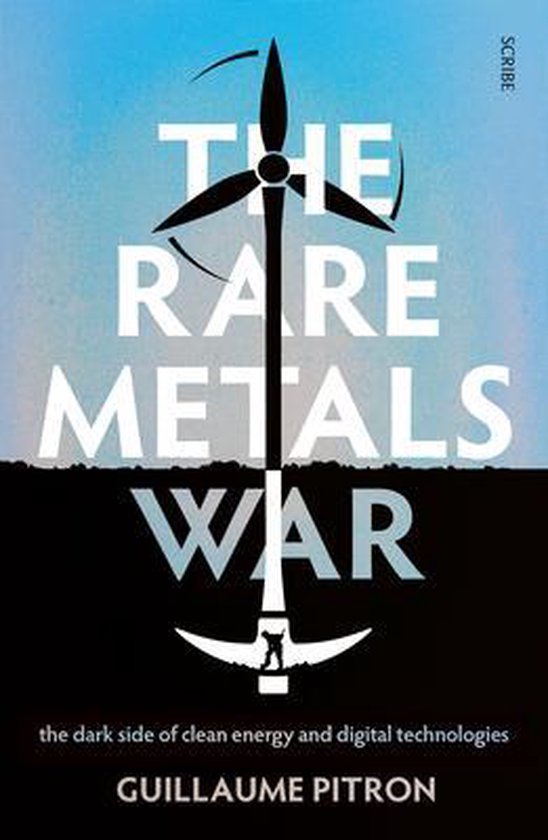
Translated from the French, Guillaume Pitron’s The Rare Metal War (2018) is a blistering journey through the political, strategic and environmental consequences of the world’s need for rare earth minerals to drive the energy transition. China’s strategic manipulation and landgrab of skills, industries and resources is detailed with admiring scorn while the western’s world apathy is considered as a general weakness of capitalism. The book is high on opinion and is meant to pack a punch. There are however also several informative appendices with data and a number of interesting factoids that I enjoyed. This is a activism more than journalism ending with the conclusion that Europe, and France especially, should restart their mining industries and do it to the highest standards; on the argument that clean mines in Europe for metals we use ourselves will prevent unmitigated environmental degradation in less regulated places like China.
https://scribepublications.co.uk/books-authors/books/the-rare-metals-war-9781912854264
Translated from the French, Guillaume Pitron’s The Rare Metal War (2018) is a blistering journey through the political, strategic and environmental consequences of the world’s need for rare earth minerals to drive the energy transition. China’s strategic manipulation and landgrab of skills, industries and resources is detailed with admiring scorn while the western’s world apathy is considered as a general weakness of capitalism. The book is high on opinion and is meant to pack a punch. There are however also several informative appendices with data and a number of interesting factoids that I enjoyed. This is a activism more than journalism ending with the conclusion that Europe, and France especially, should restart their mining industries and do it to the highest standards; on the argument that clean mines in Europe for metals we use ourselves will prevent unmitigated environmental degradation in less regulated places like China.
PDF: the EJAtlas, Mapping the frontiers and front lines of global environmental justice
https://journals.librarypublishing.arizona.edu/jpe/article/1932/galley/2191/view/
This article highlights the need for collaborative research on ecological conflicts within a global perspective. As the social metabolism of our industrial economy increases, intensifying extractive activities and the production of waste, the related social and environmental impacts generate conflicts and resistance across the world. This expansion of global capitalism leads to greater disconnection between the diverse geographies of injustice along commodity chains. Yet, at the same time, through the globalization of governance processes and Environmental Justice (EJ) movements, local political ecologies are becoming increasingly transnational and interconnected.
https://journals.librarypublishing.arizona.edu/jpe/article/1932/galley/2191/view/
This article highlights the need for collaborative research on ecological conflicts within a global perspective. As the social metabolism of our industrial economy increases, intensifying extractive activities and the production of waste, the related social and environmental impacts generate conflicts and resistance across the world. This expansion of global capitalism leads to greater disconnection between the diverse geographies of injustice along commodity chains. Yet, at the same time, through the globalization of governance processes and Environmental Justice (EJ) movements, local political ecologies are becoming increasingly transnational and interconnected.
Rules Without Rights: Land, Labor, and Private Authority in the Global Economy
https://books.google.nl/books?id=P49HDwAAQBAJ
Activists have exposed startling forms of labor exploitation and environmental degradation in global industries, leading many large retailers and brands to adopt standards for fairness and sustainability. This book is about the idea that transnational corporations can push these rules through their global supply chains, and in effect, pull factories, forests, and farms out of their local contexts and up to global best practices. For many scholars and practitioners, this kind of private regulation and global standard-setting can provide an alternative to regulation by territorially bound, gridlocked, or incapacitated nation states, potentially improving environments and working conditions around the world and protecting the rights of exploited workers, impoverished farmers, and marginalized communities. But can private, voluntary rules actually create meaningful forms of regulation? Are forests and factories around the world being made into sustainable ecosystems and decent workplaces? Can global norms remake local orders? This book provides striking new answers by comparing the private regulation of land and labor in democratic and authoritarian settings. Case studies of sustainable forestry and fair labor standards in Indonesia and China show not only how transnational standards are implemented “on the ground” but also how they are constrained and reconfigured by domestic governance. Combining rich multi-method analyses, a powerful comparative approach, and a new theory of private regulation, this book reveals the contours and contradictions of transnational governance.
https://books.google.nl/books?id=P49HDwAAQBAJ
Activists have exposed startling forms of labor exploitation and environmental degradation in global industries, leading many large retailers and brands to adopt standards for fairness and sustainability. This book is about the idea that transnational corporations can push these rules through their global supply chains, and in effect, pull factories, forests, and farms out of their local contexts and up to global best practices. For many scholars and practitioners, this kind of private regulation and global standard-setting can provide an alternative to regulation by territorially bound, gridlocked, or incapacitated nation states, potentially improving environments and working conditions around the world and protecting the rights of exploited workers, impoverished farmers, and marginalized communities. But can private, voluntary rules actually create meaningful forms of regulation? Are forests and factories around the world being made into sustainable ecosystems and decent workplaces? Can global norms remake local orders? This book provides striking new answers by comparing the private regulation of land and labor in democratic and authoritarian settings. Case studies of sustainable forestry and fair labor standards in Indonesia and China show not only how transnational standards are implemented “on the ground” but also how they are constrained and reconfigured by domestic governance. Combining rich multi-method analyses, a powerful comparative approach, and a new theory of private regulation, this book reveals the contours and contradictions of transnational governance.
How Complex Systems Fail
https://how.complexsystems.fail/
Being a Short Treatise on the Nature of Failure. This does not deal with global supply chains but the thinking is applicable
https://how.complexsystems.fail/
Being a Short Treatise on the Nature of Failure. This does not deal with global supply chains but the thinking is applicable
Article; How We Broke the Supply Chain
https://prospect.org/economy/how-we-broke-the-supply-chain-intro/
Almost none of these stories will explain how these shortages and price hikes were also brought to life through bad public policy coupled with decades of corporate greed. We spent a half-century allowing business executives and financiers to take control of our supply chains, enabled by leaders in both parties. They all hailed the transformation, cheering the advances of globalization, the efficient network that would free us from want. Motivated by greed and dismissive of the public interest, they didn’t mention that their invention was supremely ill-equipped to handle inevitable supply bottlenecks. And the pandemic exposed this hidden risk, like a domino bringing down a system primed to topple.
https://prospect.org/economy/how-we-broke-the-supply-chain-intro/
Almost none of these stories will explain how these shortages and price hikes were also brought to life through bad public policy coupled with decades of corporate greed. We spent a half-century allowing business executives and financiers to take control of our supply chains, enabled by leaders in both parties. They all hailed the transformation, cheering the advances of globalization, the efficient network that would free us from want. Motivated by greed and dismissive of the public interest, they didn’t mention that their invention was supremely ill-equipped to handle inevitable supply bottlenecks. And the pandemic exposed this hidden risk, like a domino bringing down a system primed to topple.
Article, Ghost Ships
https://logicmag.io/pivot/ghost-ships/
Squinting against the sun, I tried to imagine the ships another way: as numbers on a screen, cells in a spreadsheet, dots on a grid. I’d been reading about the information transfer that accompanies the movement of these vessels, and I knew that the scale of this data is nearly as impressive as the ships’ sheer size. Ships like those docked at Long Beach are vital links in the global supply chain, but they’re also floating “data terminals,” as the global maritime industry consultancy Lloyd’s Register put it in 2015. Increasingly, these vessels receive and transmit an enormous amount of information: about their position, of course, but also about weather, traffic, temperature, maintenance, staffing, ocean conditions, and much more. The streams of information are so complex that they threaten to exceed humans’ ability to interpret them. That’s partly why many newer vessels—“smart ships,” in industry parlance—use complex algorithms (some of them devised by Google and Microsoft) to chart their courses. Within the next decade, carriers hope to launch fleets of automated or remote-controlled vessels—“ghost ships,” as they’re sometimes called.
https://logicmag.io/pivot/ghost-ships/
Squinting against the sun, I tried to imagine the ships another way: as numbers on a screen, cells in a spreadsheet, dots on a grid. I’d been reading about the information transfer that accompanies the movement of these vessels, and I knew that the scale of this data is nearly as impressive as the ships’ sheer size. Ships like those docked at Long Beach are vital links in the global supply chain, but they’re also floating “data terminals,” as the global maritime industry consultancy Lloyd’s Register put it in 2015. Increasingly, these vessels receive and transmit an enormous amount of information: about their position, of course, but also about weather, traffic, temperature, maintenance, staffing, ocean conditions, and much more. The streams of information are so complex that they threaten to exceed humans’ ability to interpret them. That’s partly why many newer vessels—“smart ships,” in industry parlance—use complex algorithms (some of them devised by Google and Microsoft) to chart their courses. Within the next decade, carriers hope to launch fleets of automated or remote-controlled vessels—“ghost ships,” as they’re sometimes called.
Book; The Supply Chain Revolution
https://www.goodreads.com/book/show/35386752-the-supply-chain-revolution
This is one of those airport bestsellers you know will be bad but read anyway just to reaffirm your bias. Most of this deals not so much with supply chains, has nothing revolutionary to tell and most of all is so narrowly focused on profit that any business would be bankrupted be following it. The real revolutions in supply chain management are all focused on digitization, provenance, quality and sustainability. None of these are mentioned.
https://www.goodreads.com/book/show/35386752-the-supply-chain-revolution
This is one of those airport bestsellers you know will be bad but read anyway just to reaffirm your bias. Most of this deals not so much with supply chains, has nothing revolutionary to tell and most of all is so narrowly focused on profit that any business would be bankrupted be following it. The real revolutions in supply chain management are all focused on digitization, provenance, quality and sustainability. None of these are mentioned.
Article, Droughts and Dams
https://www.phenomenalworld.org/analysis/droughts-and-dams/
Most of Zambia’s grid electricity is generated by hydropower. Over the past decade, recurring droughts—in 2015, 2016, 2019, and now again in 2022—have exposed deep vulnerabilities in the system. These droughts have unleashed unprecedented power outages, with low reservoir levels constraining hydroelectricity generation capacity.
https://www.phenomenalworld.org/analysis/droughts-and-dams/
Most of Zambia’s grid electricity is generated by hydropower. Over the past decade, recurring droughts—in 2015, 2016, 2019, and now again in 2022—have exposed deep vulnerabilities in the system. These droughts have unleashed unprecedented power outages, with low reservoir levels constraining hydroelectricity generation capacity.
Article, Cyborg Trucking
https://www.phenomenalworld.org/interviews/karen-levy/
In her new book Data Driven: Truckers, Technology, and the New Workplace Surveillance, Karen Levy of Cornell University offers an in-depth view of the US long haul trucking industry, explaining why so few workers today are willing to take up what was once considered a respectable, skilled job. Decimated by waves of deregulation and union-busting since the 1970s, a once highly organized and well-paid workforce has fragmented over time, subjected to the intensifying discipline of markets and management.
https://www.phenomenalworld.org/interviews/karen-levy/
In her new book Data Driven: Truckers, Technology, and the New Workplace Surveillance, Karen Levy of Cornell University offers an in-depth view of the US long haul trucking industry, explaining why so few workers today are willing to take up what was once considered a respectable, skilled job. Decimated by waves of deregulation and union-busting since the 1970s, a once highly organized and well-paid workforce has fragmented over time, subjected to the intensifying discipline of markets and management.
Article, A data-sharing approach for supply chain visibility
https://www.brookings.edu/techstream/a-data-sharing-approach-for-greater-supply-chain-visibility/
Amid the lingering effects of the COVID-19 pandemic, rising inflation, the war in Ukraine, geopolitical tensions in East Asia, and more frequent extreme weather events, manufacturing supply chains continue to struggle in bringing goods when and where they are needed. These disruptions have affected all aspects of end-to-end supply chains, producing demand shifts, supply and manufacturing capacity reductions, and coordination failures. Prior to 2020, most supply chain designs lacked the resilience needed to cope with these disruptions, and, in response, companies have tried to diversify their sourcing and increase inventories and manufacturing capacity, all of which have led to increased cost. Now more than ever, companies need a new paradigm for cost-competitive resilience if they are to redesign supply chains while maintaining their competitive advantages. Firms are increasingly turning toward better contingency planning, improving organizational readiness and worker flexibility, automation, and building more collaborative relationships with suppliers to improve supply chain resilience.
https://www.brookings.edu/techstream/a-data-sharing-approach-for-greater-supply-chain-visibility/
Amid the lingering effects of the COVID-19 pandemic, rising inflation, the war in Ukraine, geopolitical tensions in East Asia, and more frequent extreme weather events, manufacturing supply chains continue to struggle in bringing goods when and where they are needed. These disruptions have affected all aspects of end-to-end supply chains, producing demand shifts, supply and manufacturing capacity reductions, and coordination failures. Prior to 2020, most supply chain designs lacked the resilience needed to cope with these disruptions, and, in response, companies have tried to diversify their sourcing and increase inventories and manufacturing capacity, all of which have led to increased cost. Now more than ever, companies need a new paradigm for cost-competitive resilience if they are to redesign supply chains while maintaining their competitive advantages. Firms are increasingly turning toward better contingency planning, improving organizational readiness and worker flexibility, automation, and building more collaborative relationships with suppliers to improve supply chain resilience.
Article, Six ways to improve global supply chains
https://www.brookings.edu/research/six-ways-to-improve-global-supply-chains/
In this paper, I outline six ways to improve global supply chains: Boosting domestic production through on-shoring and near-shoring
Easing transportation jams
Prioritizing public health
Managing labor shortages
Fighting anti-competitive practices
Mitigating geopolitical tensions
https://www.brookings.edu/research/six-ways-to-improve-global-supply-chains/
In this paper, I outline six ways to improve global supply chains: Boosting domestic production through on-shoring and near-shoring
Easing transportation jams
Prioritizing public health
Managing labor shortages
Fighting anti-competitive practices
Mitigating geopolitical tensions
Book: Fashionopolis
https://www.penguinrandomhouse.com/books/554229/fashionopolis-by-dana-thomas/

Historically, the apparel trade has exploited labor, the environment, and intellectual property—and in the last three decades, with the simultaneous unfurling of fast fashion, globalization, and the tech revolution, those abuses have multiplied exponentially, primarily out of view. We are in dire need of an entirely new human-scale model.
https://www.penguinrandomhouse.com/books/554229/fashionopolis-by-dana-thomas/
Historically, the apparel trade has exploited labor, the environment, and intellectual property—and in the last three decades, with the simultaneous unfurling of fast fashion, globalization, and the tech revolution, those abuses have multiplied exponentially, primarily out of view. We are in dire need of an entirely new human-scale model.
Researching Supply Chains
https://libguides.rutgers.edu/supply_chain
Guide to approaches and secondary resources for researching supply chains from Rutger University Library
https://libguides.rutgers.edu/supply_chain
Guide to approaches and secondary resources for researching supply chains from Rutger University Library
Paper, Sustainable Tea at Unilever (2012)
https://blogs.ubc.ca/courseblogsis_ubc_ba_504_001_2014w1-2_45258-sis_ubc_ba_504_001_2014w1-2_45258/files/2015/08/Sustainable-Tea-at-Unilever.pdf
In 2010, Unilever announced its commitment to a new “Sustainable Living Plan,” a document that set wide-ranging, companywide goals for improving the health and well-being of consumers, reducing environmental impact, and, perhaps most ambitiously, sourcing 100% of agricultural raw materials sustainably by 2020. Such a goal implied a massive transformation of a supply chain that sourced close to 8 million tons of commodities across 50 different crops. Unilever CEO Paul Polman believed that the company’s ambitious goals could drive savings, product innovation, and differentiation across the company’s portfolio of products.
https://blogs.ubc.ca/courseblogsis_ubc_ba_504_001_2014w1-2_45258-sis_ubc_ba_504_001_2014w1-2_45258/files/2015/08/Sustainable-Tea-at-Unilever.pdf
In 2010, Unilever announced its commitment to a new “Sustainable Living Plan,” a document that set wide-ranging, companywide goals for improving the health and well-being of consumers, reducing environmental impact, and, perhaps most ambitiously, sourcing 100% of agricultural raw materials sustainably by 2020. Such a goal implied a massive transformation of a supply chain that sourced close to 8 million tons of commodities across 50 different crops. Unilever CEO Paul Polman believed that the company’s ambitious goals could drive savings, product innovation, and differentiation across the company’s portfolio of products.
Book, The Outlaw Ocean
https://en.wikipedia.org/wiki/The_Outlaw_Ocean

The dark underbelly of supply chains
https://en.wikipedia.org/wiki/The_Outlaw_Ocean
The dark underbelly of supply chains
Article, Food fraud and counterfeit cotton: the detectives untangling the global supply chain
https://www.theguardian.com/news/2021/sep/16/food-fraud-counterfeit-cotton-detectives-untangling-global-supply-chain
Amid the complex web of international trade, proving the authenticity of a product can be near-impossible. But one company is taking the search to the atomic level
https://www.theguardian.com/news/2021/sep/16/food-fraud-counterfeit-cotton-detectives-untangling-global-supply-chain
Amid the complex web of international trade, proving the authenticity of a product can be near-impossible. But one company is taking the search to the atomic level
Article, Four years into the trade war, are the US and China decoupling?
https://www.piie.com/blogs/realtime-economics/four-years-trade-war-are-us-and-china-decoupling
For many decades China and the United States have been locked in such a tight economic embrace that it is challenging to quantify whether, how, or why the embrace may be weakening. Are the mounting tensions, bordering on hostility, between the two superpowers causing their economies to “decouple”?
https://www.piie.com/blogs/realtime-economics/four-years-trade-war-are-us-and-china-decoupling
For many decades China and the United States have been locked in such a tight economic embrace that it is challenging to quantify whether, how, or why the embrace may be weakening. Are the mounting tensions, bordering on hostility, between the two superpowers causing their economies to “decouple”?
Article, Murder at Sea
https://hakaimagazine.com/features/murder-at-sea/
When a grainy video of a grisly mass shooting on the high seas surfaced, one determined detective and a host of NGOs went on a quest for justice
https://hakaimagazine.com/features/murder-at-sea/
When a grainy video of a grisly mass shooting on the high seas surfaced, one determined detective and a host of NGOs went on a quest for justice
WWF, Traceability principles for wild-caught fish products
https://wwfint.awsassets.panda.org/downloads/wwf_traceability_principles_for_wild_caught_fish_products_.pdf

Principle 1 — Essential Information
All wild-caught fish product traceability systems should provide rapid access to reliable information that is efficient to assess the compliance of the fish product under consideration with all applicable legal requirements.
Principle 2 — Full Chain Traceability
All wild-caught fish product traceability systems should be able to provide “full chain” traceability from the point of catch to the point of final sale, and should be able to establish a verifiable and complete chain of custody/ownership of the product as it moves through the supply chain.
Principle 3 — Effective Tracking of Product Transformations
All wild-caught fish product traceability systems should record tracking of product transformations and information on the location of product sufficiently to ensure that the legal origin of products can be readily established at the final point of sale, and that claims related to sustainability or fishing methods are readily verifiable.
Principle 4 — Digital Information and Standardized Data Formats
Wild-caught fish product traceability systems should employ electronic recording of data, labelling, and tracking in standard data formats from point of capture to point of final sale.
Principle 5 — Verification
All wild-caught fish product traceability systems, and all claims based on them, must be subject to credible and transparent external verification mechanisms and regular independent audits, including effective governmental oversight and enforcement as well as, where applicable, credible third-party verification.
Principle 6 — Transparency and Public Access to Information
All wild-caught fish product traceability systems should be as transparent as possible and should provide consumers and other stakeholders the information needed to inform responsible choices
https://wwfint.awsassets.panda.org/downloads/wwf_traceability_principles_for_wild_caught_fish_products_.pdf
Principle 1 — Essential Information
All wild-caught fish product traceability systems should provide rapid access to reliable information that is efficient to assess the compliance of the fish product under consideration with all applicable legal requirements.
Principle 2 — Full Chain Traceability
All wild-caught fish product traceability systems should be able to provide “full chain” traceability from the point of catch to the point of final sale, and should be able to establish a verifiable and complete chain of custody/ownership of the product as it moves through the supply chain.
Principle 3 — Effective Tracking of Product Transformations
All wild-caught fish product traceability systems should record tracking of product transformations and information on the location of product sufficiently to ensure that the legal origin of products can be readily established at the final point of sale, and that claims related to sustainability or fishing methods are readily verifiable.
Principle 4 — Digital Information and Standardized Data Formats
Wild-caught fish product traceability systems should employ electronic recording of data, labelling, and tracking in standard data formats from point of capture to point of final sale.
Principle 5 — Verification
All wild-caught fish product traceability systems, and all claims based on them, must be subject to credible and transparent external verification mechanisms and regular independent audits, including effective governmental oversight and enforcement as well as, where applicable, credible third-party verification.
Principle 6 — Transparency and Public Access to Information
All wild-caught fish product traceability systems should be as transparent as possible and should provide consumers and other stakeholders the information needed to inform responsible choices
Traceability for Sustainable Trade A Framework to design Traceability Systems for Cross Border Trade
https://unece.org/fileadmin/DAM/trade/Publications/ECE_TRADE_429E_TraceabilityForSustainableTrade.pdf

Traceability systems are often private sector driven as producers seek to promote certain claims about their products, however, government agencies may also have a significant role. Government intervention increases the complexity of traceability systems as it introduces new elements such as data-sharing, confidentiality of information, governance and regulatory compliance. This has the potential to impact on trade, especially when governments seek to protect consumers by requiring certain documents or data from traders in order to ensure the veracity of policy claims.
The United Nations Economic Commission for Europe has developed a framework for designing traceability systems in order to ensure that traceability is efficiently dealt with in cross-border trade so that it can better contribute to the sustainable development goals. This framework should be useful for government officials and private sector actors involved in designing and implementing traceability systems.
https://unece.org/fileadmin/DAM/trade/Publications/ECE_TRADE_429E_TraceabilityForSustainableTrade.pdf
Traceability systems are often private sector driven as producers seek to promote certain claims about their products, however, government agencies may also have a significant role. Government intervention increases the complexity of traceability systems as it introduces new elements such as data-sharing, confidentiality of information, governance and regulatory compliance. This has the potential to impact on trade, especially when governments seek to protect consumers by requiring certain documents or data from traders in order to ensure the veracity of policy claims.
The United Nations Economic Commission for Europe has developed a framework for designing traceability systems in order to ensure that traceability is efficiently dealt with in cross-border trade so that it can better contribute to the sustainable development goals. This framework should be useful for government officials and private sector actors involved in designing and implementing traceability systems.
Traceability systems in the CITES context
https://cites.org/sites/default/files/eng/prog/shark/docs/BodyofInf12.pdf

"Traceability systems in the CITES context: A review of experiences, best practices and lessons learned for the traceability of commodities of CITES- listed shark species" (2015) by Victoria Mundy and Glenn Sant is really interesting overview of approaches to traceability with multiple examples (caviar, timber, crocodile skins) giving you a good scope about implementation details about various traceability systems.


https://cites.org/sites/default/files/eng/prog/shark/docs/BodyofInf12.pdf
"Traceability systems in the CITES context: A review of experiences, best practices and lessons learned for the traceability of commodities of CITES- listed shark species" (2015) by Victoria Mundy and Glenn Sant is really interesting overview of approaches to traceability with multiple examples (caviar, timber, crocodile skins) giving you a good scope about implementation details about various traceability systems.
The Container Port PERFORMANCE INDEX 2021
https://thedocs.worldbank.org/en/doc/66e3aa5c3be4647addd01845ce353992-0190062022/original/Container-Port-Performance-Index-2021.pdf
Maritime transport is the backbone of globalized trade and the manufacturing supply chain. The mari- time sector offers the most economical, energy efficient, and reliable mode of transportation over long distances. More than four-fifths of global merchandise trade (by volume) is carried by sea. A significant and growing portion of that volume, accounting for approximately 35 percent of total volumes and more than 60 percent of commercial value, is carried in containers. The growth of containerization has led to vast changes in the where and the how goods are manufactured and processed, a process that continues to evolve. Container ports, accordingly, are critical nodes in global supply chains and central to the growth strategies of many emerging economies. In many cases, the development of high-qual- ity container port infrastructure, operated efficiently, has been a prerequisite to successful export-led growth strategies. It can facilitate investment in production and distribution systems, supporting the expansion of manufacturing and logistics, creating employment, and raising income levels.
https://thedocs.worldbank.org/en/doc/66e3aa5c3be4647addd01845ce353992-0190062022/original/Container-Port-Performance-Index-2021.pdf
Maritime transport is the backbone of globalized trade and the manufacturing supply chain. The mari- time sector offers the most economical, energy efficient, and reliable mode of transportation over long distances. More than four-fifths of global merchandise trade (by volume) is carried by sea. A significant and growing portion of that volume, accounting for approximately 35 percent of total volumes and more than 60 percent of commercial value, is carried in containers. The growth of containerization has led to vast changes in the where and the how goods are manufactured and processed, a process that continues to evolve. Container ports, accordingly, are critical nodes in global supply chains and central to the growth strategies of many emerging economies. In many cases, the development of high-qual- ity container port infrastructure, operated efficiently, has been a prerequisite to successful export-led growth strategies. It can facilitate investment in production and distribution systems, supporting the expansion of manufacturing and logistics, creating employment, and raising income levels.
ACM Leidraad Duurzaamheidsclaims
https://www.acm.nl/sites/default/files/documents/leidraad-duurzaamheidsclaims.pdf

De Autoriteit Consument en Markt (hierna ook: de ACM) is een onafhankelijke toezichthouder. De missie van de ACM is om markten goed te laten werken voor mensen en bedrijven, nu en in de toekomst. Dit doet de ACM onder meer door toezicht te houden op de naleving van de wetten en regels waaraan bedrijven zich moeten houden in hun omgang met consumenten. De ACM draagt bij aan voldoende informatie en vertrouwen zodat consumenten een goede beslissing kunnen nemen over de aankoop van een product of dienst. Ook beschermt de ACM bedrijven tegen oneerlijke concurrentie van bedrijven die zich niet aan de regels houden. Met deze ’Leidraad duurzaamheidsclaims’ (hierna ook: de leidraad) legt de ACM aan bedrijven uit hoe zij de consumentenregels over oneerlijke handelspraktijken toepast op duurzaamheidsclaims.1 Met vuistregels, uitleg en praktische voorbeelden geeft de ACM handvatten aan bedrijven voor het formuleren en evalueren van duurzaamheidsclaims. De voorbeelden dienen als illustraties van duurzaamheidsclaims die mogelijk misleidend zijn. Of een claim daadwerkelijk misleidend is, is afhankelijk van de omstandigheden van het geval.
https://www.acm.nl/sites/default/files/documents/leidraad-duurzaamheidsclaims.pdf
De Autoriteit Consument en Markt (hierna ook: de ACM) is een onafhankelijke toezichthouder. De missie van de ACM is om markten goed te laten werken voor mensen en bedrijven, nu en in de toekomst. Dit doet de ACM onder meer door toezicht te houden op de naleving van de wetten en regels waaraan bedrijven zich moeten houden in hun omgang met consumenten. De ACM draagt bij aan voldoende informatie en vertrouwen zodat consumenten een goede beslissing kunnen nemen over de aankoop van een product of dienst. Ook beschermt de ACM bedrijven tegen oneerlijke concurrentie van bedrijven die zich niet aan de regels houden. Met deze ’Leidraad duurzaamheidsclaims’ (hierna ook: de leidraad) legt de ACM aan bedrijven uit hoe zij de consumentenregels over oneerlijke handelspraktijken toepast op duurzaamheidsclaims.1 Met vuistregels, uitleg en praktische voorbeelden geeft de ACM handvatten aan bedrijven voor het formuleren en evalueren van duurzaamheidsclaims. De voorbeelden dienen als illustraties van duurzaamheidsclaims die mogelijk misleidend zijn. Of een claim daadwerkelijk misleidend is, is afhankelijk van de omstandigheden van het geval.
Article, Is the US chicken industry cheating its farmers?
https://www.theguardian.com/environment/2019/aug/03/is-the-us-chicken-industry-cheating-its-farmers
A report for poultry companies produced by a secretive data-sharing firm, reviewed in a joint investigation by the Guardian and the Food and Environment Reporting Network (Fern), shows sensitive market information including how much producers are being paid per chicken. US anti-trust officials are currently conducting a grand jury investigation into poultry companies in response to a major class-action lawsuit alleging that the firms use information supplied by Agri Stats, a data company, to keep farmers’ pay low and chicken prices high. Agri Stats produces daily reports for the poultry industry on chicken production, and has enabled companies to share detailed financial information with one another for decades.
https://www.theguardian.com/environment/2019/aug/03/is-the-us-chicken-industry-cheating-its-farmers
A report for poultry companies produced by a secretive data-sharing firm, reviewed in a joint investigation by the Guardian and the Food and Environment Reporting Network (Fern), shows sensitive market information including how much producers are being paid per chicken. US anti-trust officials are currently conducting a grand jury investigation into poultry companies in response to a major class-action lawsuit alleging that the firms use information supplied by Agri Stats, a data company, to keep farmers’ pay low and chicken prices high. Agri Stats produces daily reports for the poultry industry on chicken production, and has enabled companies to share detailed financial information with one another for decades.
Article, De datagrariër
https://www.platform-investico.nl/artikel/de-datagrarier/
Investico onderzocht in samenwerking met Trouw de landbouwsector en ontdekte hoe de datagedreven landbouw een machtsverschuiving in de sector teweeg brengt. Via de data van hun slimme landbouwapparatuur raken boeren afhankelijker van een aantal grote spelers in het veld. Dat levert soms grote financiële schade op en kan, zoals bij incidenten met melkrobots, zelfs dieren het leven kosten. Privacywetten bieden de boeren weinig bescherming omdat hun data geen mensen betreffen, maar dieren of machines. Ook prijsmanipulaties en hogere prijzen in de supermarkten liggen op de loer. Want wie precies toegang heeft tot waardevolle agrarische gegevens, is voor boeren en landbouworganisaties onduidelijk. De meeste landbouwers hebben geen idee aan wie ze daarvoor toestemming hebben gegeven, blijkt uit een enquête van Investico samen met de Zuidelijke Land- en Tuinbouworganisatie ZLTO.
https://www.platform-investico.nl/artikel/de-datagrarier/
Investico onderzocht in samenwerking met Trouw de landbouwsector en ontdekte hoe de datagedreven landbouw een machtsverschuiving in de sector teweeg brengt. Via de data van hun slimme landbouwapparatuur raken boeren afhankelijker van een aantal grote spelers in het veld. Dat levert soms grote financiële schade op en kan, zoals bij incidenten met melkrobots, zelfs dieren het leven kosten. Privacywetten bieden de boeren weinig bescherming omdat hun data geen mensen betreffen, maar dieren of machines. Ook prijsmanipulaties en hogere prijzen in de supermarkten liggen op de loer. Want wie precies toegang heeft tot waardevolle agrarische gegevens, is voor boeren en landbouworganisaties onduidelijk. De meeste landbouwers hebben geen idee aan wie ze daarvoor toestemming hebben gegeven, blijkt uit een enquête van Investico samen met de Zuidelijke Land- en Tuinbouworganisatie ZLTO.
Article, Decentralized Exploitation
https://hackernoon.com/the-rise-of-digital-neo-colonialism-rc1h3xdr
"The goal was to inform the consumer about the origin of their goods, and we believed that once informed, they would make better choices. Like most blockchain supply chain startups, we believed we could create a more fair environment for the farmers, that consumers would tip through blockchain, that things would get better for everyone.
A single coffee bean is almost worthless alone, it is only in bags of thousands of other beans that they have any value. Likewise, the data about a single coffee bean is worth so little that a farmer is incapable of extracting any value from it. Even cooperatives that represent scores of farmers are limited in their ability to extract value from the data of a single bean.
Of course, if you can build a supply chain pipeline that can capture the data about every bean, suddenly everything is different. With enough data you can create a comprehensive picture of the heath of harvests, the effect of fertilizers and farming methods, you can understand rainfall, climate change, and yields. You can look into the past and predict the future, correlate growing conditions, identify and eliminate inefficiencies and standardize quality. Most importantly, however, you can create an entirely new resource: data, and the more of it you collect, the more valuable it becomes."
https://hackernoon.com/the-rise-of-digital-neo-colonialism-rc1h3xdr
"The goal was to inform the consumer about the origin of their goods, and we believed that once informed, they would make better choices. Like most blockchain supply chain startups, we believed we could create a more fair environment for the farmers, that consumers would tip through blockchain, that things would get better for everyone.
A single coffee bean is almost worthless alone, it is only in bags of thousands of other beans that they have any value. Likewise, the data about a single coffee bean is worth so little that a farmer is incapable of extracting any value from it. Even cooperatives that represent scores of farmers are limited in their ability to extract value from the data of a single bean.
Of course, if you can build a supply chain pipeline that can capture the data about every bean, suddenly everything is different. With enough data you can create a comprehensive picture of the heath of harvests, the effect of fertilizers and farming methods, you can understand rainfall, climate change, and yields. You can look into the past and predict the future, correlate growing conditions, identify and eliminate inefficiencies and standardize quality. Most importantly, however, you can create an entirely new resource: data, and the more of it you collect, the more valuable it becomes."
Website, Hamish van der Ven
https://hamishvanderven.com/research/
My research examines the role of businesses, NGOs, and standard setters in solving transboundary environmental challenges. This research program is inherently interdisciplinary and seeks to put elements of political science, environmental studies and business/management in conversation. In the absence of comprehensive state-led solutions, a host of innovative transnational governance initiatives have emerged that use market forces to address environmental problems. The rise of these new forms of governance raises a number of questions. Under what conditions are they likely to be effective? How do they interact with the traditional authority of governments and international organizations? And what negative externalities do the create? I address these questions across a number of related projects, reviewed below.
https://hamishvanderven.com/research/
My research examines the role of businesses, NGOs, and standard setters in solving transboundary environmental challenges. This research program is inherently interdisciplinary and seeks to put elements of political science, environmental studies and business/management in conversation. In the absence of comprehensive state-led solutions, a host of innovative transnational governance initiatives have emerged that use market forces to address environmental problems. The rise of these new forms of governance raises a number of questions. Under what conditions are they likely to be effective? How do they interact with the traditional authority of governments and international organizations? And what negative externalities do the create? I address these questions across a number of related projects, reviewed below.
Article: We Were Warned About the Ports
https://prospect.org/economy/we-were-warned-about-the-ports/
As the American economy became increasingly reliant on goods made in East Asia, so too did it rely on the only port that could readily receive them, L.A./Long Beach, which strained against its own limitations. The expansive nearby population of Southern California, once seen as an asset to finding cheap and ample labor to unload containers and drive trucks and staff warehouses, soon became a hindrance to expansion, as land around the ports was ringed with housing, making growth impossible. Instead, the ports began expanding out into the sea, with major terraforming initiatives to conjure more dock space from the ocean floor, a process that still couldn’t keep up with the strains of a growing e-commerce sector that relied overwhelmingly on Chinese manufacturing. (This led to a separate problem during the supply crunch: where to put the empty containers. Often they were dumped in residential neighborhoods, towering above modest homes and subdivisions.)
https://prospect.org/economy/we-were-warned-about-the-ports/
As the American economy became increasingly reliant on goods made in East Asia, so too did it rely on the only port that could readily receive them, L.A./Long Beach, which strained against its own limitations. The expansive nearby population of Southern California, once seen as an asset to finding cheap and ample labor to unload containers and drive trucks and staff warehouses, soon became a hindrance to expansion, as land around the ports was ringed with housing, making growth impossible. Instead, the ports began expanding out into the sea, with major terraforming initiatives to conjure more dock space from the ocean floor, a process that still couldn’t keep up with the strains of a growing e-commerce sector that relied overwhelmingly on Chinese manufacturing. (This led to a separate problem during the supply crunch: where to put the empty containers. Often they were dumped in residential neighborhoods, towering above modest homes and subdivisions.)
Article: A US Freight Rail Crisis Threatens More Supply Chain Chaos
https://www.wired.com/story/a-us-freight-rail-crisis-threatens-more-supply-chain-chaos/
Early this summer, farmers worried that millions of chickens in California’s Central Valley might soon peck each other to death. The birds were running perilously low on feed, which should have been delivered by Union Pacific Railroad from Midwestern corn producers. Foster Farms needed at least nine trainloads of corn each month to feed its tens of millions of chickens and turkeys, plus tens of thousands of dairy cows at its California facilities. But the trains weren’t showing up. Chickens can’t go long without eating—they become aggressive and turn to cannibalism—and if the feed didn’t arrive soon, the mega-flock would have to be euthanized.
https://www.wired.com/story/a-us-freight-rail-crisis-threatens-more-supply-chain-chaos/
Early this summer, farmers worried that millions of chickens in California’s Central Valley might soon peck each other to death. The birds were running perilously low on feed, which should have been delivered by Union Pacific Railroad from Midwestern corn producers. Foster Farms needed at least nine trainloads of corn each month to feed its tens of millions of chickens and turkeys, plus tens of thousands of dairy cows at its California facilities. But the trains weren’t showing up. Chickens can’t go long without eating—they become aggressive and turn to cannibalism—and if the feed didn’t arrive soon, the mega-flock would have to be euthanized.
Book: The Travels of a T-Shirt in the Global Economy: An Economist Examines the Markets, Power, and
https://www.wiley.com/en-us/The+Travels+of+a+T+Shirt+in+the+Global+Economy%3A+An+Economist+Examines+the+Markets%2C+Power%2C+and+Politics+of+World+Trade+New+Preface+and+Epilogue+with+Updates+on+Economic+Issues+and+Main+Characters%2C+2nd+Edition-p-97
By title ‘The Travels of a T-Shirt in the Global Economy’, (Pietra Rivoli, 2005) sound like a potential lost classic of traceability. Unfortunately, it is not. A t-shirt is bought in Florida, screen-printed in Florida from a shirt made from Texan cotton in Shanghai. That is the coat hanger for the narrative, but of little substance to the overall book. The debates on the pros and cons of globalism are still here but have changed so much that the context for this book seems Jurassic. What we do get is a particular argument on how nations develop economically and that the bottom of the race to the bottom is progressively less deep. Long before food and energy textile supply chains achieved global reach and the results on working conditions have always been brutal. Rivoli foresaw that the apparel industry would eventually leave China. The Rana Plaza tragedy however shows how the deep the bottom can still be. There are interesting chapters on the ways the US textile sector managed to escape free market conditions and it ends with an overview of the 2nd life of donated clothing in Africa. It seems 2005 is long time ago.
https://www.wiley.com/en-us/The+Travels+of+a+T+Shirt+in+the+Global+Economy%3A+An+Economist+Examines+the+Markets%2C+Power%2C+and+Politics+of+World+Trade+New+Preface+and+Epilogue+with+Updates+on+Economic+Issues+and+Main+Characters%2C+2nd+Edition-p-97
By title ‘The Travels of a T-Shirt in the Global Economy’, (Pietra Rivoli, 2005) sound like a potential lost classic of traceability. Unfortunately, it is not. A t-shirt is bought in Florida, screen-printed in Florida from a shirt made from Texan cotton in Shanghai. That is the coat hanger for the narrative, but of little substance to the overall book. The debates on the pros and cons of globalism are still here but have changed so much that the context for this book seems Jurassic. What we do get is a particular argument on how nations develop economically and that the bottom of the race to the bottom is progressively less deep. Long before food and energy textile supply chains achieved global reach and the results on working conditions have always been brutal. Rivoli foresaw that the apparel industry would eventually leave China. The Rana Plaza tragedy however shows how the deep the bottom can still be. There are interesting chapters on the ways the US textile sector managed to escape free market conditions and it ends with an overview of the 2nd life of donated clothing in Africa. It seems 2005 is long time ago.
Paper: Consumer Trust in Social Responsibility Communications: The Role of Supply Chain Visibility
https://deliverypdf.ssrn.com/delivery.php?ID=93602407200008800112210310508706701100504501002909101709901009212709700612601000700704504804005402604600008008701506702912101603001709208301610712606508101010306409102107302412709300409110910912307801309
Consumers are becoming more knowledgeable about companies’ social responsibility (SR) practices. As a result, they are increasingly skeptical when companies do not provide clear information about these practices. One way to overcome this skepticism is to strengthen consumer trust through improved supply chain trans- parency. To create transparency requires a company to both gain visibility into its supply chain and disclose information to consumers. However, the current SR literature has only focused on the effect of disclosure on consumer trust, while the effect of visibility on trust in SR communications is not well understood.
https://deliverypdf.ssrn.com/delivery.php?ID=93602407200008800112210310508706701100504501002909101709901009212709700612601000700704504804005402604600008008701506702912101603001709208301610712606508101010306409102107302412709300409110910912307801309
Consumers are becoming more knowledgeable about companies’ social responsibility (SR) practices. As a result, they are increasingly skeptical when companies do not provide clear information about these practices. One way to overcome this skepticism is to strengthen consumer trust through improved supply chain trans- parency. To create transparency requires a company to both gain visibility into its supply chain and disclose information to consumers. However, the current SR literature has only focused on the effect of disclosure on consumer trust, while the effect of visibility on trust in SR communications is not well understood.
Report: Untangling Apparel Supply Chains with Open Data
https://cdn2.assets-servd.host/tidy-shrike/production/assets/downloads/From-Opaque-to-Open.pdf
Those working in the apparel industry know how complex and fragmented apparel supply chains are, with even the simplest of items involving multiple suppliers across multiple continents. Following the mass uptake of off- shoring in the 80s and 90s, the supply chains of most global brands are thousands of miles away from their headquarters or the final point of sale, and the majority of brands don’t own the facilities in which their products are being made. This physical distance and lack of ownership makes keeping track of supply chains a complex and costly endeavor.
https://cdn2.assets-servd.host/tidy-shrike/production/assets/downloads/From-Opaque-to-Open.pdf
Those working in the apparel industry know how complex and fragmented apparel supply chains are, with even the simplest of items involving multiple suppliers across multiple continents. Following the mass uptake of off- shoring in the 80s and 90s, the supply chains of most global brands are thousands of miles away from their headquarters or the final point of sale, and the majority of brands don’t own the facilities in which their products are being made. This physical distance and lack of ownership makes keeping track of supply chains a complex and costly endeavor.
Article: Finding Sustainable Seafood Can Be Complex
https://www.bbc.com/future/article/20220810-can-eating-fish-ever-be-sustainable
Although this article does not spell it out, the implication for an end consumer wanting to buy sutainable will always rely on the product having traceability requirements. Certification is the best mechanism and signal we currently have for supply chains managers and consumers alike to achieve and verify this.
https://www.bbc.com/future/article/20220810-can-eating-fish-ever-be-sustainable
Although this article does not spell it out, the implication for an end consumer wanting to buy sutainable will always rely on the product having traceability requirements. Certification is the best mechanism and signal we currently have for supply chains managers and consumers alike to achieve and verify this.
"[The Marine Stewardship Council blue tick] means at least they are being audited, and they have to prove things," says Clarke. "It's a great way of just quickly and easily identifying whether something's a sustainable choice."
Certifications like these can also be a protection against fraud, a huge issue in the seafood industry.
A 2016 meta-analysis of DNA identification studies of seafood found that globally there was a 30% rate of misdescription – meaning the fish was not the species stated on the label or menu. But a 2019 DNA study by the Marine Stewardship Council found that seafood bearing its sustainability mark was labelled correctly over 99% of the time.
One issue with these labels, however, is that gaining them can be a significant process for a fishery involving data collection and a lot of paperwork – meaning not every fishery has the resources to receive the stamp, even if they are working sustainably.
Article: The resilience myth: fatal flaws in the push to secure chip supply chains
https://www.ft.com/content/f76534bf-b501-4cbf-9a46-80be9feb670c
Please use the sharing tools found via the share button at the top or side of articles. Copying articles to share with others is a breach of FT.com T&Cs and Copyright Policy. Email licensing@ft.com to buy additional rights. Subscribers may share up to 10 or 20 articles per month using the gift article service. More information can be found at https://www.ft.com/tour. https://www.ft.com/content/f76534bf-b501-4cbf-9a46-80be9feb670c In the sweltering Asia summertime of mid-June, Taiwan Semiconductor Manufacturing Co urgently dispatched a team to Japan to visit some of the company’s equipment suppliers. Why, it wanted to know, were these companies saying they could not deliver vital machines on time? TSMC is the world’s largest chip manufacturer, and its suppliers had always bent over backward to provide what the powerful company was demanding but, for the first time, it was being met with apologetic messages.
https://www.ft.com/content/f76534bf-b501-4cbf-9a46-80be9feb670c
Please use the sharing tools found via the share button at the top or side of articles. Copying articles to share with others is a breach of FT.com T&Cs and Copyright Policy. Email licensing@ft.com to buy additional rights. Subscribers may share up to 10 or 20 articles per month using the gift article service. More information can be found at https://www.ft.com/tour. https://www.ft.com/content/f76534bf-b501-4cbf-9a46-80be9feb670c In the sweltering Asia summertime of mid-June, Taiwan Semiconductor Manufacturing Co urgently dispatched a team to Japan to visit some of the company’s equipment suppliers. Why, it wanted to know, were these companies saying they could not deliver vital machines on time? TSMC is the world’s largest chip manufacturer, and its suppliers had always bent over backward to provide what the powerful company was demanding but, for the first time, it was being met with apologetic messages.
I Watched An 857-Hour Movie To Encounter Capitalism’s Extremes
https://readpassage.com/i-watched-an-857-hour-movie-to-encounter-capitalisms-extremes/
The sheer weight of time that it took just to ship a pedometer from a factory to a store was crushing. The scale of human effort needed for such an effort is often reported in easily digestible and abstracted metrics such as person-hours or costs in dollars, but to watch it gnaws at the soul. Going on the Logistics journey means encountering a staggering depiction of alienation, isolation and just how much capitalist social relations have distorted our ability to understand time and space. In Grundrisse, an unfinished text eventually published in 1939, Karl Marx first developed the idea that capitalist social relations have a way of compressing time and space. New technologies driven by the profit motive hasten the pace of everyday life until everything, from our labour to our love, is nothing but a blur.
https://readpassage.com/i-watched-an-857-hour-movie-to-encounter-capitalisms-extremes/
The sheer weight of time that it took just to ship a pedometer from a factory to a store was crushing. The scale of human effort needed for such an effort is often reported in easily digestible and abstracted metrics such as person-hours or costs in dollars, but to watch it gnaws at the soul. Going on the Logistics journey means encountering a staggering depiction of alienation, isolation and just how much capitalist social relations have distorted our ability to understand time and space. In Grundrisse, an unfinished text eventually published in 1939, Karl Marx first developed the idea that capitalist social relations have a way of compressing time and space. New technologies driven by the profit motive hasten the pace of everyday life until everything, from our labour to our love, is nothing but a blur.
Paper: Supply Chains and the Human Condition
https://www.sv.uio.no/sai/english/research/projects/anthropos-and-the-material/Intranet/economic-practices/reading-group/texts/tsing-supply-chains-and-the-human-condition.pdf
This article theorizes supply chain capitalism as a model for understanding both the continent-crossing scale and the constitutive diversity of contemporary global capitalism. In contrast with theories of growing capitalist homogeneity, the analysis points to the structural role of difference in the mobilization of capital, labor, and resources. Here labor mobilization in supply chains is the focus, as it depends on the performance of gender, ethnicity, nationality, religion, and citizenship status. The article uses the concept of figuration to show how difference is mobilized within supply chains, and to point to the importance of tropes of management, consumption, and entrepreneurship in workers’ understandings of supply chain labor. These tropes make supply chains possible by bringing together self-exploitation and superexploitation. Diversity is thus structurally central to global capitalism, and not decoration on a common core.
https://www.sv.uio.no/sai/english/research/projects/anthropos-and-the-material/Intranet/economic-practices/reading-group/texts/tsing-supply-chains-and-the-human-condition.pdf
This article theorizes supply chain capitalism as a model for understanding both the continent-crossing scale and the constitutive diversity of contemporary global capitalism. In contrast with theories of growing capitalist homogeneity, the analysis points to the structural role of difference in the mobilization of capital, labor, and resources. Here labor mobilization in supply chains is the focus, as it depends on the performance of gender, ethnicity, nationality, religion, and citizenship status. The article uses the concept of figuration to show how difference is mobilized within supply chains, and to point to the importance of tropes of management, consumption, and entrepreneurship in workers’ understandings of supply chain labor. These tropes make supply chains possible by bringing together self-exploitation and superexploitation. Diversity is thus structurally central to global capitalism, and not decoration on a common core.
The Uncertain Rhythms Of Life For China’s Migrant “Bosses”
https://www.noemamag.com/the-uncertain-rhythms-of-life-for-chinas-migrant-bosses/
On the fringes of global supply chains are Chinese migrant entrepreneurs, for whom long hours and little pay are less important than climbing the social ladder toward new opportunities outside China.
https://www.noemamag.com/the-uncertain-rhythms-of-life-for-chinas-migrant-bosses/
On the fringes of global supply chains are Chinese migrant entrepreneurs, for whom long hours and little pay are less important than climbing the social ladder toward new opportunities outside China.
The 11 sins of seafood: Assessing a decade of food fraud reports in the global supply chain
https://ift.onlinelibrary.wiley.com/doi/10.1111/1541-4337.12998
Due to complex, valuable, and often extremely opaque supply chains, seafood is a commodity that has experienced a high prevalence of food fraud throughout the entirety of its logistics network. Fraud detection and prevention require an in-depth understanding of food supply chains and their vulnerabilities and risks so that food business operators, regulators, and other stakeholders can implement practical countermeasures. An analysis of historical criminality within a sector, product, or country is an important component and has not yet been conducted for the seafood sector. This study examines reported seafood fraud incidents from the European Union's Rapid Alert System for Food and Feed, Decernis's Food Fraud Database, HorizonScan, and LexisNexis databases between January 01, 2010 and December 31, 2020.
https://ift.onlinelibrary.wiley.com/doi/10.1111/1541-4337.12998
Due to complex, valuable, and often extremely opaque supply chains, seafood is a commodity that has experienced a high prevalence of food fraud throughout the entirety of its logistics network. Fraud detection and prevention require an in-depth understanding of food supply chains and their vulnerabilities and risks so that food business operators, regulators, and other stakeholders can implement practical countermeasures. An analysis of historical criminality within a sector, product, or country is an important component and has not yet been conducted for the seafood sector. This study examines reported seafood fraud incidents from the European Union's Rapid Alert System for Food and Feed, Decernis's Food Fraud Database, HorizonScan, and LexisNexis databases between January 01, 2010 and December 31, 2020.
Article: We Need Assurance!
https://www.acsac.org/2005/papers/Snow.pdf

'We Need Assurance!' is a paper from 1999 by Brian Snow of the NSA. It is a classic in the computer security literature. In certification the term assurance is used to name those activities that safeguard that products sold as certified are indeed entitled to this claim. Supply chain assurance is a distinct field of security and the parallels with the concerns of this paper are obvious throughout.
https://www.acsac.org/2005/papers/Snow.pdf
'We Need Assurance!' is a paper from 1999 by Brian Snow of the NSA. It is a classic in the computer security literature. In certification the term assurance is used to name those activities that safeguard that products sold as certified are indeed entitled to this claim. Supply chain assurance is a distinct field of security and the parallels with the concerns of this paper are obvious throughout.
Article: Digital extraction: Blockchain traceability in mineral supply chains
https://www.sciencedirect.com/science/article/pii/S096262982100041X?via%3Dihub
Digital data — including technologically-mediated data generated by blockchain-enabled traceability — is performing an increasingly integral role in extractive operations, but scarce attention has been paid to the structuring effect of these digital technologies or the socio-economic spatiality of data-driven mining operations. Drawing on extensive qualitative research (interviews, participant observation, and two sets of survey data among actors relevant to these mineral supply chains), this article advances the notion of “digital extraction” to describe the collection, analysis, and instrumentalization of digital data generated under the banner of blockchain-based due diligence, chain of custody certifications, and various transparency mechanisms, situated alongside and in support of mineral extraction.
https://www.sciencedirect.com/science/article/pii/S096262982100041X?via%3Dihub
Digital data — including technologically-mediated data generated by blockchain-enabled traceability — is performing an increasingly integral role in extractive operations, but scarce attention has been paid to the structuring effect of these digital technologies or the socio-economic spatiality of data-driven mining operations. Drawing on extensive qualitative research (interviews, participant observation, and two sets of survey data among actors relevant to these mineral supply chains), this article advances the notion of “digital extraction” to describe the collection, analysis, and instrumentalization of digital data generated under the banner of blockchain-based due diligence, chain of custody certifications, and various transparency mechanisms, situated alongside and in support of mineral extraction.
Paper: Traceability is Free
http://vcm-international.com/wp-content/uploads/2013/08/Traceability-Is-Free.pdf
Competitive Advantage of Food Traceability to Value Chain Management (2013). Well thought out with examples and definitions
http://vcm-international.com/wp-content/uploads/2013/08/Traceability-Is-Free.pdf
Competitive Advantage of Food Traceability to Value Chain Management (2013). Well thought out with examples and definitions
Industrial Dynamics (1961)

Jay Wright Forrester (1918-2016) first pioneered the development of magnetic computer memory before moving on to something really diffiult: system dynamics. This discipline studies and simulates the interaction between dynamic systems and provided the type of computer modelling that enabled the Limit to Growth report by the Club of Rome. Industrial dynamics is also, crucially, an early attempt to model supply chains. Here are a few images from his Industrial Dynamics (1961), a landmark book with still stunning graphs.


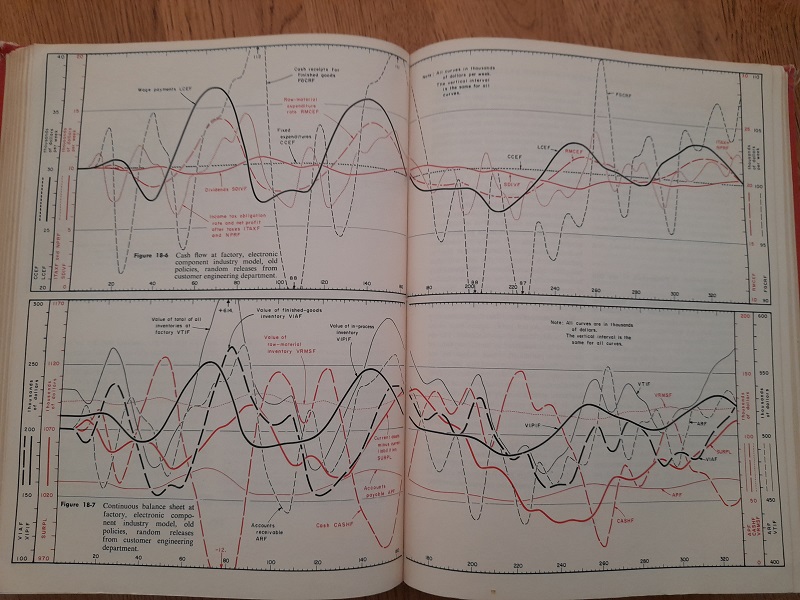
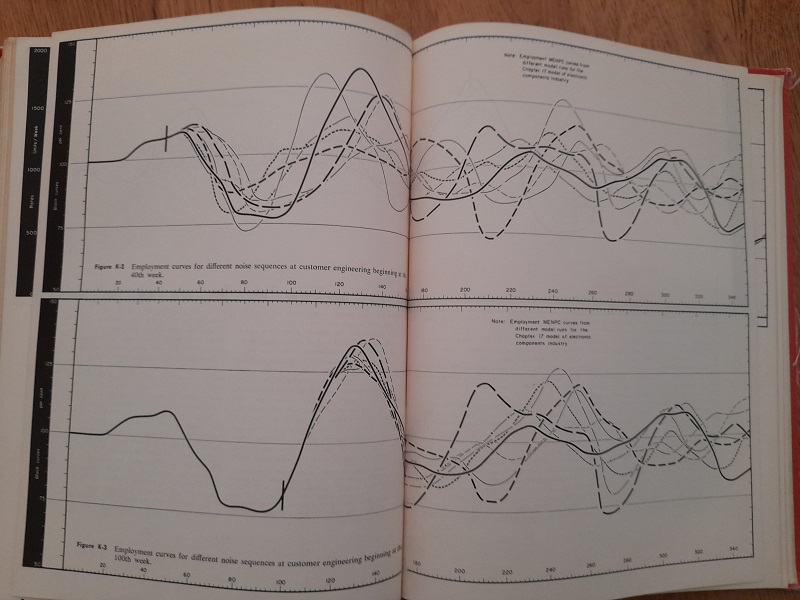
Jay Wright Forrester (1918-2016) first pioneered the development of magnetic computer memory before moving on to something really diffiult: system dynamics. This discipline studies and simulates the interaction between dynamic systems and provided the type of computer modelling that enabled the Limit to Growth report by the Club of Rome. Industrial dynamics is also, crucially, an early attempt to model supply chains. Here are a few images from his Industrial Dynamics (1961), a landmark book with still stunning graphs.
Book: Cannibals with Forks, The Triple Bottom Line of 21st Century Business
https://books.google.nl/books/about/Cannibals_with_Forks.html?id=dIJAbIM7XNcC
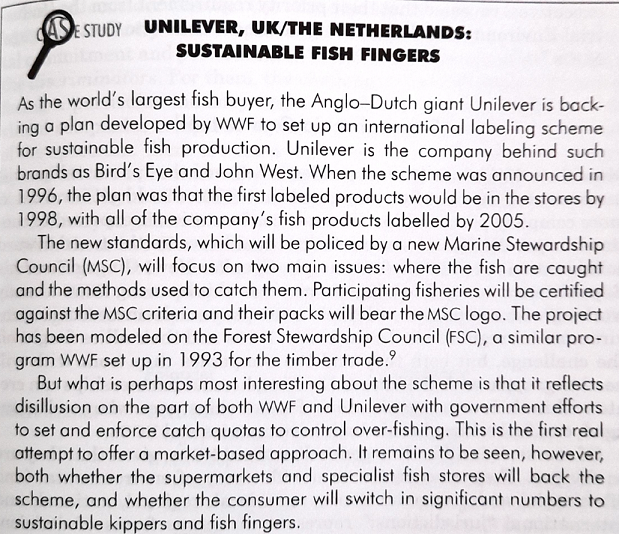
Market success will often depend upon a company's ability to satisfy the three-pronged fork of profitability, environmental quality, and social justice. This is the ur-text for market-driven certification schemes.
https://books.google.nl/books/about/Cannibals_with_Forks.html?id=dIJAbIM7XNcC
Market success will often depend upon a company's ability to satisfy the three-pronged fork of profitability, environmental quality, and social justice. This is the ur-text for market-driven certification schemes.
Article: Can Global Brands Create Just Supply Chains?
https://bostonreview.net/forum/can-global-brands-create-just-supply-chains-richard-locke/
I began studying Nike because I was impressed with its commitment to labor standards. After several years of effort, with many conversations and visits to corporate headquarters, I convinced the company to share its factory audit reports and facilitate visits to its suppliers. Eventually my case study evolved into a full-fledged research project involving the collection, coding, and analysis of thousands of factory audit reports; more than 700 interviews with company managers, factory directors, NGO representatives, and government labor inspectors; and field research in 120 factories in fourteen different countries. What began as a study of one company (Nike) in a particular industry (athletic footwear) grew to include several global corporations competing in different industries, with different supply chain dynamics, operating across numerous national boundaries.
https://bostonreview.net/forum/can-global-brands-create-just-supply-chains-richard-locke/
I began studying Nike because I was impressed with its commitment to labor standards. After several years of effort, with many conversations and visits to corporate headquarters, I convinced the company to share its factory audit reports and facilitate visits to its suppliers. Eventually my case study evolved into a full-fledged research project involving the collection, coding, and analysis of thousands of factory audit reports; more than 700 interviews with company managers, factory directors, NGO representatives, and government labor inspectors; and field research in 120 factories in fourteen different countries. What began as a study of one company (Nike) in a particular industry (athletic footwear) grew to include several global corporations competing in different industries, with different supply chain dynamics, operating across numerous national boundaries.
Article: After Free Trade
https://bostonreview.net/articles/after-free-trade/
The Suez Canal cut the time it took to travel from London to Mumbai in half; Panama did the same for travel times in the Americas. Complex global commodity chains emerged for the first time. Their network structure was amazingly hierarchical: by the end of the nineteenth century, every part of the world was connected to Europe, if not necessarily to adjacent countries or even neighboring provinces. In the Western Hemisphere, the only international rail links were in North America; they were meant to carry lumber, grain, and hides out of Canada and silver, gold, copper, and nickel from Mexico in exchange for finished goods from the United States.
https://bostonreview.net/articles/after-free-trade/
The Suez Canal cut the time it took to travel from London to Mumbai in half; Panama did the same for travel times in the Americas. Complex global commodity chains emerged for the first time. Their network structure was amazingly hierarchical: by the end of the nineteenth century, every part of the world was connected to Europe, if not necessarily to adjacent countries or even neighboring provinces. In the Western Hemisphere, the only international rail links were in North America; they were meant to carry lumber, grain, and hides out of Canada and silver, gold, copper, and nickel from Mexico in exchange for finished goods from the United States.
Article: How the Shipping Industry Sails through Legal Loopholes
https://hakaimagazine.com/features/how-the-shipping-industry-sails-through-legal-loopholes/
A murky world of shell companies, flags of convenience, and end-of-life flags allows companies to dodge accountability and dispose of ships cheaply
https://hakaimagazine.com/features/how-the-shipping-industry-sails-through-legal-loopholes/
A murky world of shell companies, flags of convenience, and end-of-life flags allows companies to dodge accountability and dispose of ships cheaply
Novel, The Shipping Man
https://www.goodreads.com/book/show/12895441-the-shipping-man
When restless New York City hedge fund manager Robert Fairchild watches the Baltic Dry Cargo Index plunge 97%, registering an all-time high and a 25-year low within the span of just six months, he decides to buy a ship. Immediately fantasizing about naming a vessel after his wife, carrying a string of worry beads and being able to introduce himself as a "shipowner" at his upcoming college reunion, Fairchild immediately embarks on an odyssey into the most exclusive, glamorous and high stakes business in the world. From pirates off the coast of Somalia and on Wall Street to Greek and Norwegian shipping magnates, the education of Robert Fairchild is an expensive one. In the end, he loses his hedge fund, but he gains a life - as a Shipping Man. Part fast paced financial thriller, part ship finance text book, The Shipping Man is 310 pages of required reading for anyone with an interest in capital formation for shipping.
https://www.goodreads.com/book/show/12895441-the-shipping-man
When restless New York City hedge fund manager Robert Fairchild watches the Baltic Dry Cargo Index plunge 97%, registering an all-time high and a 25-year low within the span of just six months, he decides to buy a ship. Immediately fantasizing about naming a vessel after his wife, carrying a string of worry beads and being able to introduce himself as a "shipowner" at his upcoming college reunion, Fairchild immediately embarks on an odyssey into the most exclusive, glamorous and high stakes business in the world. From pirates off the coast of Somalia and on Wall Street to Greek and Norwegian shipping magnates, the education of Robert Fairchild is an expensive one. In the end, he loses his hedge fund, but he gains a life - as a Shipping Man. Part fast paced financial thriller, part ship finance text book, The Shipping Man is 310 pages of required reading for anyone with an interest in capital formation for shipping.
Supply Chain Evolution – Theory, Concepts and Science
http://sro.sussex.ac.uk/id/eprint/60767/1/__smbhome.uscs.susx.ac.uk_qlfd7_Desktop_Supply%20Chain%20Evolution.pdf
The supply chain landscape is changing. New supply chains emerge and evolve for a variety of reasons. In this paper we examine the nature of new and changing supply chains and their influences, and address the broad question “What makes a supply chain like it is?”. The paper highlights and develops key aspects, concepts, and principal themes concerning the emergence and evolution of supply chains over their life cycle. We identify six factors that interact and may affect a supply chain over its life cycle. A number of emergent themes and propositions on factors affecting a supply chain’s characteristics over its life cycle are presented. We argue that a new science is needed to investigate and understand the supply chain life cycle. Supply chains are essential to the world economy and to modern life. Understanding the supply chain life cycle and how supply chains may evolve provides fresh perspectives on contemporary supply chain management. The paper presents detailed reflections from leading researchers on emerging, evolving and mature supply chains.
http://sro.sussex.ac.uk/id/eprint/60767/1/__smbhome.uscs.susx.ac.uk_qlfd7_Desktop_Supply%20Chain%20Evolution.pdf
The supply chain landscape is changing. New supply chains emerge and evolve for a variety of reasons. In this paper we examine the nature of new and changing supply chains and their influences, and address the broad question “What makes a supply chain like it is?”. The paper highlights and develops key aspects, concepts, and principal themes concerning the emergence and evolution of supply chains over their life cycle. We identify six factors that interact and may affect a supply chain over its life cycle. A number of emergent themes and propositions on factors affecting a supply chain’s characteristics over its life cycle are presented. We argue that a new science is needed to investigate and understand the supply chain life cycle. Supply chains are essential to the world economy and to modern life. Understanding the supply chain life cycle and how supply chains may evolve provides fresh perspectives on contemporary supply chain management. The paper presents detailed reflections from leading researchers on emerging, evolving and mature supply chains.
Book: The Digital Supply Chain
https://books.google.nl/books?id=IcBZEAAAQBAJ
The Digital Supply Chain is a thorough investigation of the underpinning technologies, systems, platforms and models that enable the design, management, and control of digitally connected supply chains. The book examines the origin, emergence and building blocks of the Digital Supply Chain, showing how and where the virtual and physical supply chain worlds interact. It reviews the enabling technologies that underpin digitally controlled supply chains and examines how the discipline of supply chain management is affected by enhanced digital connectivity, discussing purchasing and procurement, supply chain traceability, performance management, and supply chain cyber security.
https://books.google.nl/books?id=IcBZEAAAQBAJ
The Digital Supply Chain is a thorough investigation of the underpinning technologies, systems, platforms and models that enable the design, management, and control of digitally connected supply chains. The book examines the origin, emergence and building blocks of the Digital Supply Chain, showing how and where the virtual and physical supply chain worlds interact. It reviews the enabling technologies that underpin digitally controlled supply chains and examines how the discipline of supply chain management is affected by enhanced digital connectivity, discussing purchasing and procurement, supply chain traceability, performance management, and supply chain cyber security.
Book: Around the World in Eighty Days
https://en.wikipedia.org/wiki/Around_the_World_in_Eighty_Days
Here Jules Verne for the first time in history imagined the possibility of planning a journey across the world. The canary in the coalmine of supply chain management.
https://en.wikipedia.org/wiki/Around_the_World_in_Eighty_Days
Here Jules Verne for the first time in history imagined the possibility of planning a journey across the world. The canary in the coalmine of supply chain management.
Book: Choke Points Logistics Workers Disrupting the Global Supply Chain
https://www.plutobooks.com/9781786802347/choke-points/
Relying on the steady flow of goods across the world, trans-national companies such as Wal-Mart and Amazon depend on the work of millions in docks, warehouses and logistics centres to keep their goods moving. This is the global supply chain, and, if the chain is broken, capitalism grinds to a halt. This book looks at case studies across the world to uncover a network of resistance by these workers who, despite their importance, often face vast exploitation and economic violence. Experiencing first hand wildcat strikes, organised blockades and boycotts, the authors explore a diverse range of case studies, from South China dockworkers to the transformation of the port of Piraeus in Greece, and from the Southern California logistics sector, to dock and logistical workers in Chile and unions in Turkey.
https://www.plutobooks.com/9781786802347/choke-points/
Relying on the steady flow of goods across the world, trans-national companies such as Wal-Mart and Amazon depend on the work of millions in docks, warehouses and logistics centres to keep their goods moving. This is the global supply chain, and, if the chain is broken, capitalism grinds to a halt. This book looks at case studies across the world to uncover a network of resistance by these workers who, despite their importance, often face vast exploitation and economic violence. Experiencing first hand wildcat strikes, organised blockades and boycotts, the authors explore a diverse range of case studies, from South China dockworkers to the transformation of the port of Piraeus in Greece, and from the Southern California logistics sector, to dock and logistical workers in Chile and unions in Turkey.
Book: Value Chains, The New Economic Imperialism
https://monthlyreview.org/product/value-chains/
Value Chains uncovers the concrete processes through which multinational corporations, located primarily in the Global North, capture value from the Global South. We are brought face to face with various state-of-the-art corporate strategies that enforce “economical” and “flexible” production, including labor management methods, aimed to reassert the imperial dominance of the North, while continuing the dependency of the Global South and polarizing the global economy. Case studies of Indonesian suppliers exemplify the growing burden borne by the workers of the Global South, whose labor creates the surplus value that enriches the capitalists of the North, as well as the secondary capitals of the South. Today, those who control the value chains and siphon off the profits are primarily financial interests with vast economic and political power—the power that must be broken if the global working class is to liberate itself.
https://monthlyreview.org/product/value-chains/
Value Chains uncovers the concrete processes through which multinational corporations, located primarily in the Global North, capture value from the Global South. We are brought face to face with various state-of-the-art corporate strategies that enforce “economical” and “flexible” production, including labor management methods, aimed to reassert the imperial dominance of the North, while continuing the dependency of the Global South and polarizing the global economy. Case studies of Indonesian suppliers exemplify the growing burden borne by the workers of the Global South, whose labor creates the surplus value that enriches the capitalists of the North, as well as the secondary capitals of the South. Today, those who control the value chains and siphon off the profits are primarily financial interests with vast economic and political power—the power that must be broken if the global working class is to liberate itself.
Article: Infrastructure and Logistics
https://www.societyandspace.org/topics/infrastructure-and-logistics
Foregrounds the built systems or networks that coordinate the circulation of things, people, money, and data into integrated wholes. Provides an analytical framework for critically interrogating the relation between built networks and their spatial mobilities, including attention to their institutional dimensions, political economies, and forms of life that interact with and reshape their geographies.
https://www.societyandspace.org/topics/infrastructure-and-logistics
Foregrounds the built systems or networks that coordinate the circulation of things, people, money, and data into integrated wholes. Provides an analytical framework for critically interrogating the relation between built networks and their spatial mobilities, including attention to their institutional dimensions, political economies, and forms of life that interact with and reshape their geographies.
Book: Sinews of War and Trade
https://www.societyandspace.org/articles/sinews-of-war-and-trade
Sinews of War and Trade: Shipping and Capitalism in the Arabian Peninsula, Laleh Khalili highlights the centrality of shipping and maritime infrastructure to global capitalism.
https://www.societyandspace.org/articles/sinews-of-war-and-trade
Sinews of War and Trade: Shipping and Capitalism in the Arabian Peninsula, Laleh Khalili highlights the centrality of shipping and maritime infrastructure to global capitalism.
Book: Red Plenty
https://www.theguardian.com/books/2010/aug/08/red-plenty-francis-spufford
Set in Soviet Russia, these vivid short stories highlight the failings of planned economies. What else is Supply Chain Management than a uniquely Soviet science reapplied?
https://www.theguardian.com/books/2010/aug/08/red-plenty-francis-spufford
Set in Soviet Russia, these vivid short stories highlight the failings of planned economies. What else is Supply Chain Management than a uniquely Soviet science reapplied?
History of Food Traceability
https://www.researchgate.net/publication/325247189_History_of_food_traceability
In the past the food industry has had its fair share of scandals, accidents, and incidents. It must be pointed out that reported food scares were not always associated with microorganisms; many of them were connected to new technology, environmental pollution or changes in co-product management. For example the food colorant (tartrazine and amaranth) incident reported in mid-1980 in UK; mercury poisoning in oranges reported in 1979; mercury poisoning in fish reported in 1970; radioactivity in lamb reported in 1986; glass, pin and caustic soda found in baby food product reported in UK in 1989 which resulted in the recall of 100 million jars off the shelves and repackaging of another 60 million. These incidents are very much in the memories of the general public.
https://www.researchgate.net/publication/325247189_History_of_food_traceability
In the past the food industry has had its fair share of scandals, accidents, and incidents. It must be pointed out that reported food scares were not always associated with microorganisms; many of them were connected to new technology, environmental pollution or changes in co-product management. For example the food colorant (tartrazine and amaranth) incident reported in mid-1980 in UK; mercury poisoning in oranges reported in 1979; mercury poisoning in fish reported in 1970; radioactivity in lamb reported in 1986; glass, pin and caustic soda found in baby food product reported in UK in 1989 which resulted in the recall of 100 million jars off the shelves and repackaging of another 60 million. These incidents are very much in the memories of the general public.
Book: The Geography of Transport Systems
https://transportgeography.org/
The mobility of passengers and freight is fundamental to economic and social activities such as commuting, manufacturing, distributing goods, or supplying energy. Each movement has a purpose, an origin, a potential set of intermediate locations, and a destination. Mobility is supported and driven by transport systems composed of infrastructures, modes, and terminals. They enable individuals, institutions, corporations, regions, and nations to interact and undertake economic, social, cultural, or political activities. Understanding how mobility is linked with the geography of transportation is the primary purpose of this textbook.
https://transportgeography.org/
The mobility of passengers and freight is fundamental to economic and social activities such as commuting, manufacturing, distributing goods, or supplying energy. Each movement has a purpose, an origin, a potential set of intermediate locations, and a destination. Mobility is supported and driven by transport systems composed of infrastructures, modes, and terminals. They enable individuals, institutions, corporations, regions, and nations to interact and undertake economic, social, cultural, or political activities. Understanding how mobility is linked with the geography of transportation is the primary purpose of this textbook.
Article: The Rise of the Shipping Container
https://hakaimagazine.com/videos-visuals/in-graphic-detail-the-rise-of-the-shipping-container/
Every industry has its base unit, the quantity by which growth and decline are measured. In shipping, that unit is the 20-foot (six-meter) container, roughly the size of the tiniest of tiny homes. In the 21st century, it is the conduit for much of the material goods that furnish our lives. With infographic.
https://hakaimagazine.com/videos-visuals/in-graphic-detail-the-rise-of-the-shipping-container/
Every industry has its base unit, the quantity by which growth and decline are measured. In shipping, that unit is the 20-foot (six-meter) container, roughly the size of the tiniest of tiny homes. In the 21st century, it is the conduit for much of the material goods that furnish our lives. With infographic.
Book: Ninety Percent of Everything
https://en.wikipedia.org/wiki/Ninety_Percent_of_Everything
Inside Shipping, the Invisible Industry That Puts Clothes on Your Back, Gas in Your Car, And Food on Your Plate is a book by Rose George about the international shipping industry.
https://en.wikipedia.org/wiki/Ninety_Percent_of_Everything
Inside Shipping, the Invisible Industry That Puts Clothes on Your Back, Gas in Your Car, And Food on Your Plate is a book by Rose George about the international shipping industry.
Book: The World for Sale
https://books.google.nl/books?id=ia8gEAAAQBAJ
The modern world is built on commodities - from the oil that fuels our cars to the metals that power our smartphones. We rarely stop to consider where they have come from. But we should. In The World for Sale, two leading journalists lift the lid on one of the least scrutinised corners of the world economy: the workings of the billionaire commodity traders who buy, hoard and sell the earth's resources. It is the story of how a handful of swashbuckling businessmen became indispensable cogs in global markets: enabling an enormous expansion in international trade, and connecting resource-rich countries - no matter how corrupt or war-torn - with the world's financial centres.
https://books.google.nl/books?id=ia8gEAAAQBAJ
The modern world is built on commodities - from the oil that fuels our cars to the metals that power our smartphones. We rarely stop to consider where they have come from. But we should. In The World for Sale, two leading journalists lift the lid on one of the least scrutinised corners of the world economy: the workings of the billionaire commodity traders who buy, hoard and sell the earth's resources. It is the story of how a handful of swashbuckling businessmen became indispensable cogs in global markets: enabling an enormous expansion in international trade, and connecting resource-rich countries - no matter how corrupt or war-torn - with the world's financial centres.
Book: Gomorra
https://books.google.nl/books?id=XMNQvgAACAAJ&dq=gomorra
Psychogeographic account on the Italian maffia as parasitic upon global supply chains
https://books.google.nl/books?id=XMNQvgAACAAJ&dq=gomorra
Psychogeographic account on the Italian maffia as parasitic upon global supply chains
Book: Principles of Supply Chain Management: A Balanced Approach
https://books.google.nl/books?id=N2NczgEACAAJ&dq=supply+chain+management+wisner

The text follows the natural flow through the supply chain--resulting in one of the most balanced approaches available.
https://books.google.nl/books?id=N2NczgEACAAJ&dq=supply+chain+management+wisner
The text follows the natural flow through the supply chain--resulting in one of the most balanced approaches available.
Book: Modelling the Supply Chain
https://books.google.nl/books/about/Modeling_the_Supply_Chain.html?id=XvmY2BQ1Q30C&redir_esc=y
With an emphasis on modeling techniques, Jeremy Shapiro’s MODELING THE SUPPLY CHAIN is the perfect tool for courses in supply chain management or for professional managers who seek better analytical tools for managing their supply chains, information technologists who are responsible for developing and/or maintaining such tools, and consultants who conduct supply chain studies using models.
https://books.google.nl/books/about/Modeling_the_Supply_Chain.html?id=XvmY2BQ1Q30C&redir_esc=y
With an emphasis on modeling techniques, Jeremy Shapiro’s MODELING THE SUPPLY CHAIN is the perfect tool for courses in supply chain management or for professional managers who seek better analytical tools for managing their supply chains, information technologists who are responsible for developing and/or maintaining such tools, and consultants who conduct supply chain studies using models.
Book: Supply Chain Analytics, Using Data to Optimise Supply Chain Processes
https://books.google.nl/books/about/Supply_Chain_Analytics.html?id=a_wFEAAAQBAJ
Supply Chain Analytics introduces the reader to data analytics and demonstrates the value of their effective use in supply chain management. By describing the key supply chain processes through worked examples, and the descriptive, predictive and prescriptive analytic methods that can be applied to bring about improvements to those processes, the book presents a more comprehensive learning experience for the reader than has been offered previously.
https://books.google.nl/books/about/Supply_Chain_Analytics.html?id=a_wFEAAAQBAJ
Supply Chain Analytics introduces the reader to data analytics and demonstrates the value of their effective use in supply chain management. By describing the key supply chain processes through worked examples, and the descriptive, predictive and prescriptive analytic methods that can be applied to bring about improvements to those processes, the book presents a more comprehensive learning experience for the reader than has been offered previously.
Article: Studying Logistics
https://www.jacobinmag.com/2015/02/logistics-industry-organizing-labor/
As the economy develops around a sprawling logistics industry, organizing workers in these sectors will be vital.
“Amateurs study strategy, professionals study logistics,” US Army General Omar Bradley famously said. Bradley’s declaration was of course an overstatement, but it was also a necessary correction. Logistics — the mobilization of vast resources and, most importantly, people — was the lifeblood of a winning military strategy. Without full and competent logistical support, any strategy, no matter how brilliant, will fail. It is a point worth remembering when discussing the importance of the logistics industry to the US economy. By Joe Allen.
https://www.jacobinmag.com/2015/02/logistics-industry-organizing-labor/
As the economy develops around a sprawling logistics industry, organizing workers in these sectors will be vital.
“Amateurs study strategy, professionals study logistics,” US Army General Omar Bradley famously said. Bradley’s declaration was of course an overstatement, but it was also a necessary correction. Logistics — the mobilization of vast resources and, most importantly, people — was the lifeblood of a winning military strategy. Without full and competent logistical support, any strategy, no matter how brilliant, will fail. It is a point worth remembering when discussing the importance of the logistics industry to the US economy. By Joe Allen.
Book: The Rule of Logistics
https://books.google.nl/books/about/The_Rule_of_Logistics.html?id=Cil0DwAAQBAJ&redir_esc=y
Every time you wheel a shopping cart through one of Walmart’s more than 10,000 stores worldwide, or swipe your credit card or purchase something online, you enter a mind-boggling logistical regime. Even if you’ve never shopped at Walmart, its logistics have probably affected your life. The Rule of Logistics makes sense of its spatial and architectural ramifications by analyzing the stores, distribution centers, databases, and inventory practices of the world’s largest corporation.
https://books.google.nl/books/about/The_Rule_of_Logistics.html?id=Cil0DwAAQBAJ&redir_esc=y
Every time you wheel a shopping cart through one of Walmart’s more than 10,000 stores worldwide, or swipe your credit card or purchase something online, you enter a mind-boggling logistical regime. Even if you’ve never shopped at Walmart, its logistics have probably affected your life. The Rule of Logistics makes sense of its spatial and architectural ramifications by analyzing the stores, distribution centers, databases, and inventory practices of the world’s largest corporation.
Book: Cargomobilities, Moving Materials in a Global Age
https://books.google.nl/books/about/Cargomobilities.html?id=kqcGCAAAQBAJ&redir_esc=y
Objects and materials are on the move like never before, often at astonishing speeds and along hidden routeways. This collection opens to social scientific scrutiny the various systems which move objects about the world, examining their fateful implications for many people and places. Offering texts from key thinkers, the book presents case studies from around the world which report on efforts to establish, maintain, disrupt or transform the cargo-mobility systems which have grown so dramatically in scale and significance in recent decades.
https://books.google.nl/books/about/Cargomobilities.html?id=kqcGCAAAQBAJ&redir_esc=y
Objects and materials are on the move like never before, often at astonishing speeds and along hidden routeways. This collection opens to social scientific scrutiny the various systems which move objects about the world, examining their fateful implications for many people and places. Offering texts from key thinkers, the book presents case studies from around the world which report on efforts to establish, maintain, disrupt or transform the cargo-mobility systems which have grown so dramatically in scale and significance in recent decades.
Book: The Box
https://press.princeton.edu/books/paperback/9780691170817/the-box
How the Shipping Container Made the World Smaller and the World Economy Bigger by Mark Levinson.
https://press.princeton.edu/books/paperback/9780691170817/the-box
How the Shipping Container Made the World Smaller and the World Economy Bigger by Mark Levinson.
The Deadly Life Of Logistics
https://www.societyandspace.org/articles/the-deadly-life-of-logistics-by-deborah-cowen
Deborah Cowen’s The Deadly Life of Logistics is the first of its kind: an original, imaginative, and critical theorisation of the centrality of violence to the modern logistics business. The book beautifully illuminates the conjuncture between capital accumulation and practices of security and securitisation on a global scale, zooming down to specific places and moments to better illustrate the inner workings of this conjuncture.
https://www.societyandspace.org/articles/the-deadly-life-of-logistics-by-deborah-cowen
Deborah Cowen’s The Deadly Life of Logistics is the first of its kind: an original, imaginative, and critical theorisation of the centrality of violence to the modern logistics business. The book beautifully illuminates the conjuncture between capital accumulation and practices of security and securitisation on a global scale, zooming down to specific places and moments to better illustrate the inner workings of this conjuncture.
Article: Studying Logistics
https://logicmag.io/scale/see-no-evil/
The thing that still confused me is how reliable supply chains are, or seem to be. The world is unpredictable—you’ve got earthquakes, labor strikes, mudslides, every conceivable tragedy—and yet as a consumer I can pretty much count on getting what I want whenever I want it. How can it be possible to predict a package’s arrival down to the hour, yet know almost nothing about the conditions of its manufacture?
In the supply-chain universe, there are large, tech-forward companies like Amazon and Apple, which write and maintain their own supply-chain software, and there's everyone else. And most everyone else uses SAP. SAP—the name stands for Systems, Applications, and Products—is a behemoth, less a single piece of software than a large, interlocking suite of applications, joined together through a shared database. Companies purchase SAP in "modules," and the supply-chain module interlocks with the rest of the suite. Among people who've used SAP, the reaction to hearing its name is often a pronounced sigh—like all large-scale enterprise software, SAP has a reputation for being frustrating.
https://logicmag.io/scale/see-no-evil/
The thing that still confused me is how reliable supply chains are, or seem to be. The world is unpredictable—you’ve got earthquakes, labor strikes, mudslides, every conceivable tragedy—and yet as a consumer I can pretty much count on getting what I want whenever I want it. How can it be possible to predict a package’s arrival down to the hour, yet know almost nothing about the conditions of its manufacture?
In the supply-chain universe, there are large, tech-forward companies like Amazon and Apple, which write and maintain their own supply-chain software, and there's everyone else. And most everyone else uses SAP. SAP—the name stands for Systems, Applications, and Products—is a behemoth, less a single piece of software than a large, interlocking suite of applications, joined together through a shared database. Companies purchase SAP in "modules," and the supply-chain module interlocks with the rest of the suite. Among people who've used SAP, the reaction to hearing its name is often a pronounced sigh—like all large-scale enterprise software, SAP has a reputation for being frustrating.
Book: Certifying China
https://direct.mit.edu/books/oa-monograph/5271/Certifying-ChinaThe-Rise-and-Limits-of
A comprehensive study of the growth, potential, and limits of transnational eco-certification in China and the implications for other emerging economies. China has long prioritized economic growth over environmental protection. But in recent years, the country has become a global leader in the fight to save the planet by promoting clean energy, cutting air and water pollution, and developing a system of green finance. In Certifying China, Yixian Sun explores the potential and limits of transnational eco-certification in moving the world's most populous country toward sustainable consumption and production. He identifies the forces that drive companies from three sectors—seafood, palm oil, and tea—to embrace eco-certification. The success of eco-certification, he says, will depend on the extent to which it wins the support of domestic actors in fast-growing emerging economies.
https://direct.mit.edu/books/oa-monograph/5271/Certifying-ChinaThe-Rise-and-Limits-of
A comprehensive study of the growth, potential, and limits of transnational eco-certification in China and the implications for other emerging economies. China has long prioritized economic growth over environmental protection. But in recent years, the country has become a global leader in the fight to save the planet by promoting clean energy, cutting air and water pollution, and developing a system of green finance. In Certifying China, Yixian Sun explores the potential and limits of transnational eco-certification in moving the world's most populous country toward sustainable consumption and production. He identifies the forces that drive companies from three sectors—seafood, palm oil, and tea—to embrace eco-certification. The success of eco-certification, he says, will depend on the extent to which it wins the support of domestic actors in fast-growing emerging economies.
Article: The Nasty Logistics of Returning Your Too-Small Pants
https://www.theatlantic.com/magazine/archive/2021/11/free-returns-online-shopping/620169/
What happens to the stuff you order online after you send it back?
https://www.theatlantic.com/magazine/archive/2021/11/free-returns-online-shopping/620169/
What happens to the stuff you order online after you send it back?
Article: Source Material, mining & devastation
https://reallifemag.com/source-material/
Over the last several years, a growing number of studies have tried to trace the vast networks of human labor, data, and natural resources that fuel our digital lives. From Kate Crawford and Vladan Joler’s “Anatomy of an AI System” to David Abraham’s The Elements of Power, these investigations cast new light on the exploitative practices masked by the staggering complexity of global supply chains.
https://reallifemag.com/source-material/
Over the last several years, a growing number of studies have tried to trace the vast networks of human labor, data, and natural resources that fuel our digital lives. From Kate Crawford and Vladan Joler’s “Anatomy of an AI System” to David Abraham’s The Elements of Power, these investigations cast new light on the exploitative practices masked by the staggering complexity of global supply chains.